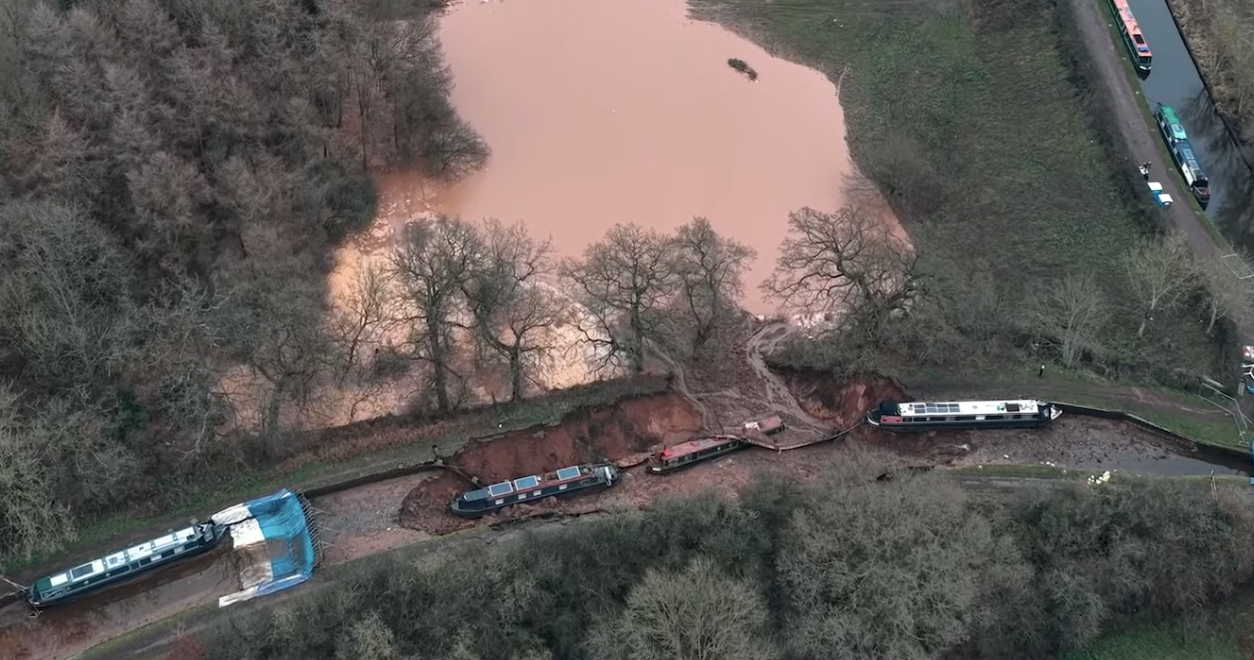
Repairs to a massive breach on a stretch of the Llangollen Canal in Whitchurch will be a ‘huge project costing several million pounds’, according to the Canal and River Trust (CRT).
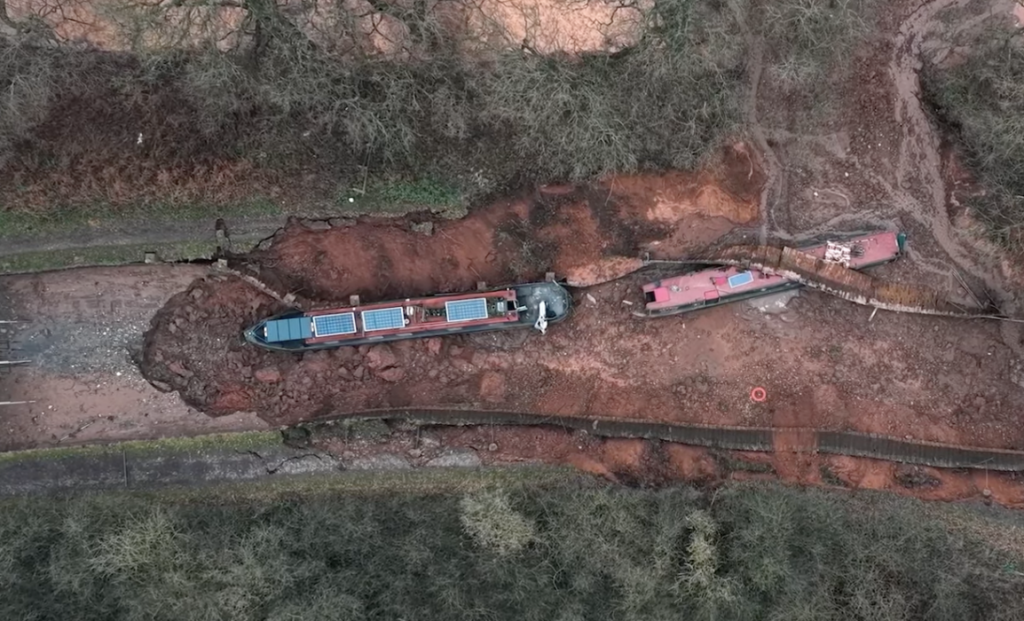
On 22 December a major incident was declared when a giant crater emerged on a stretch of the Llangollen Canal in Whitchurch, causing all its water to drain out into a nearby field.
Two boats were washed into the enormous breach hole with several others stricken. The CRT has told MIN, the stretch of canal had been inspected by CRT in November 2025 and April 2025 and no significant issues were noted.
Footage of the breach and crews battling to save and refloat the houseboats can be viewed below.
While the cause of the breach is as yet unknown two canal boats remain in the crater and the stretch of the canal will remain closed for the foreseeable future, with repairs likely to take all year.
Footage of the breach in December 2025:
A spokesperson for the Canal & River Trust told MIN on 9 January: “We’re carrying out a full investigation into the cause and will make a summary of the findings publicly available in the coming weeks, together with the learnings that our charity and other navigation authorities can benefit from.
“Our canal network spans 2,000 miles across England and Wales and is constantly inspected and maintained. Embankment breaches of this size and scale are rare.
“Inspections of the embankment at Whitchurch, including an inspection in November 2025 and a principal inspection in April 2025, didn’t raise any undue concerns about its stability.”
River Canal Rescue (RCR) were on the scene following the breach and helped refloat 12 boats.
Stephanie Horton, managing director, River Canal Rescue, says: “Having been advised the refill was happening on Christmas Eve, we sent six engineers to ensure the 12 stranded and listing boats could easily refloat in line with the rising water. Many vessels were listing on concrete plinths with outlets that could easily be overwhelmed once water levels rose, so engineers got into the canal and sealed holes at risk of water ingress. They also used tirfors and ratchet straps to hold the boats steady, ensuring they floated upright.”
After six hours RCR had stabilised and safely refloated all 12 boats.
Climate change impact on canals
Speaking to MIN last week, Horton, comments: “Although not common we have seen more [canal breaches] occurring in recent years, and as the system is over 200 years old we will unfortunately experience high requirements for maintenance and more cases of collapse. I also think the change in climate is not helping, a year of drought and then heavy rain fall is bound to put banking like this one under duress.”
Horton details that the common causes of this kind of catastrophic breach include “erosion due to heavy rain and water flow – the canals were not designed for propellor driven boats which means there is more disturbance of the canal bed and erosion, and the contamination from boats – oil, fuel, and grey water – all contribute to the breakdown of clay.”
What’s next for the UK’s ageing canal network?
While the cause of the catastrophic incident remains unknown, multiple waterway organisations have been vocal in recent years about the need for reinvestment and maintenance of waterways in the wake of evolving usage and climate change.
The UK’s canal network is over 200 years old and while environmental challenges can be unforeseen the draining of funding to the sector will inevitable have an impact.
In November 2025, the Inland Waterways Association (IWA) reported that three quarters of Britain’s canals face financial insecurity, as navigation authorities deal with reduced funding and increasing climate-related pressures.
New mapping produced by Inland Waterways indicates that 99 per cent of the country’s 5,000-mile network of canals and navigable rivers is expected to experience higher winter rainfall and greater susceptibility to drought in summer.
At the time, Charlie Norman, IWA’s director of campaigns, commented: “Right now, Britain’s matchless canal and river network faces a perfect storm of underinvestment and climate risk.
“Our findings paint an alarming picture of vital national infrastructure under increased strain. Decades of erratic government support, along with more frequent extreme weather events, have left many waterways vulnerable to breaches, closures and mounting maintenance costs. This year’s drought led to the closure of dozens of canals across the country, affecting wildlife, tourism, businesses and people living on the canals.”
In 2024, the Canal & River Trust, also released its annual report & accounts for 2023/24, revealing a year marked by record spending on maintenance, and increasing pressures on its operations due to the ageing canal infrastructure and rising costs exacerbated by climate change and inflation.
A spokesperson for CRT says: “Canals are here for all our futures, but they need constant care, maintenance, and investment, which our charity works tirelessly to secure. This includes income from donations as well from boaters, government, and the commercial uses that the canal network supports.”
The post Llangollen Canal breach: are more collapses likely? appeared first on Marine Industry News.
Leave a Reply