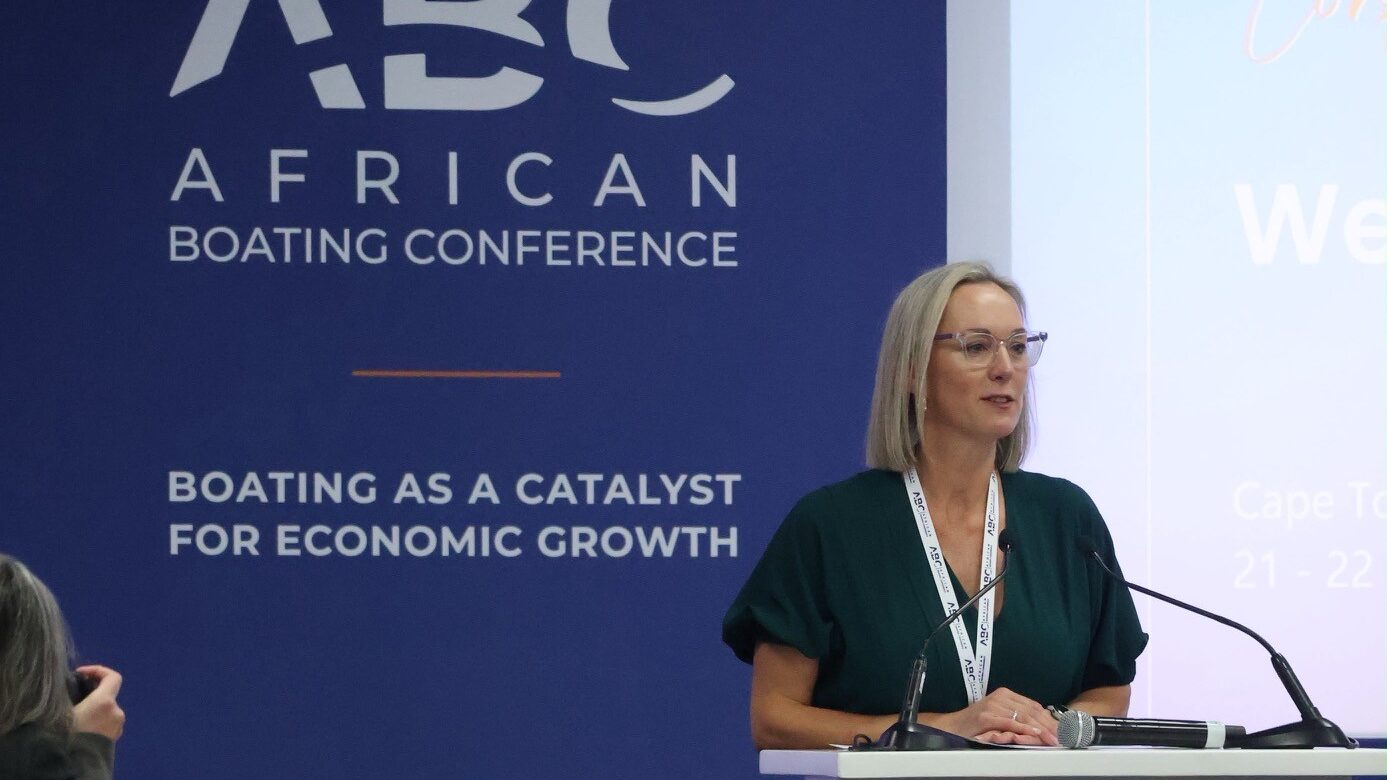
The African Boating Conference opened to a sold-out event in Cape Town yesterday (20 October 2026), with 232 registrations and 12 exhibitors. The two-day conference, hosted by Superyacht Cape Town, continues today (21 October).
Discussions so far have focused on issues including the trade barriers, manufacturing costs and skills shortages facing South African boatbuilders.
The event follows the inaugural edition in October 2025.
Under the theme ‘Boating as a Catalyst for Economic Growth’, the event brings marine businesses and government representatives together to examine opportunities across Africa’s recreational marine sector.
Western Cape premier Alan Winde and alderman James Vos, representing Invest Cape Town, addressed the opening morning. They focused on identifying what is holding businesses back from growing and exporting. They presented Western Cape’s Ease of Doing Business Matrix and dashboard as tools for tracking government departments’ progress in removing barriers to investment.
Winde also highlighted his engagement in the US over trade tariffs. South African boatbuilders use US technology, components and equipment, he explained, so restrictions on their exports can also mean fewer orders for American suppliers.

FNB chief economist Mamello Matikinca examined the wider economic pressures on businesses, including rising diesel costs, debt and interest rates. She also discusses artificial intelligence’s influence on competitiveness and identifies opportunities in African markets including Kenya, Ghana, Nigeria, Tanzania, Namibia and Mauritius.
David Duarte of Treeshake explored AI’s business applications, presenting it as a utility with implications for engineering, design and manufacturing efficiency.
Conference director Veda Pretorius says the opening discussions have underlined the need for government and industry to address the conditions affecting marine businesses.
‘Particularly encouraging’
“What has been particularly encouraging is the level of engagement from government and the recognition that understanding the real barriers facing marine businesses is essential if we want this industry to grow.
“Africa has internationally respected boatbuilders, innovative businesses and extraordinary opportunities. But expertise alone will not unlock that potential. We need the right policies, the right partnerships and a commitment to addressing the practical challenges affecting competitiveness.
“What is exciting is that these are no longer simply conversations about what Africa could become, but about what needs to happen to turn opportunity into investment, employment and sustainable economic growth.”
Organisers say the registration figure of 232 is conservative, as additional delegates have attended on the day.
Manufacturing costs and skills shortages
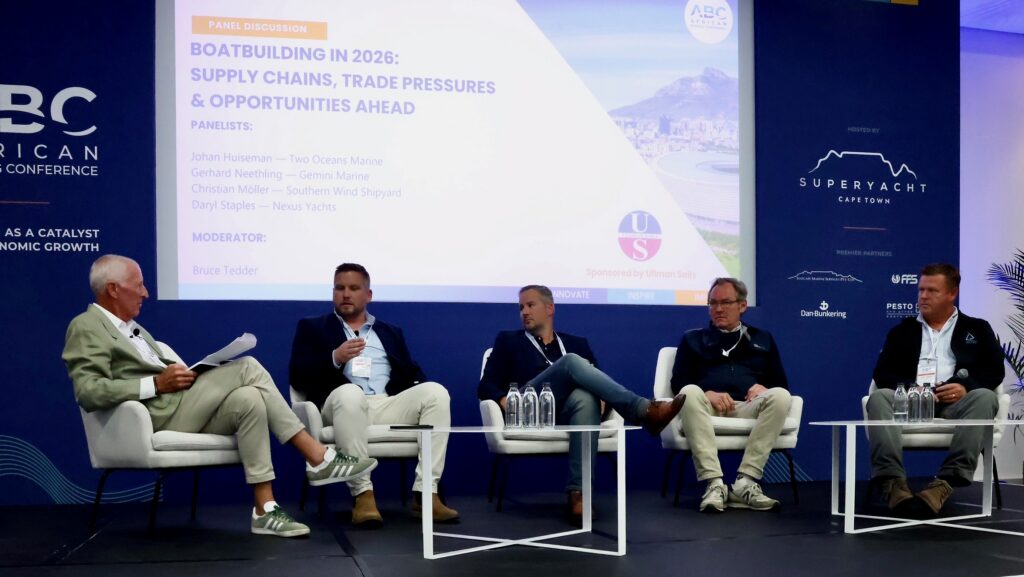
The Boatbuilding in 2026 – Supply Chains, Trade Pressures & Opportunities Ahead panel examined how South African manufacturers can respond to rising production costs and international competition. Bruce Tedder, chairman of the South African Boat Builders Export Council (Sabbex), moderated the discussion.
The panellists were Johan Huisman of Two Oceans Marine Manufacturing, Gerhard Neethling of Gemini Marine, Christian Möller of Southern Wind and Daryl Staples of Nexus Yachts.
One focus was how boatbuilders can improve production without necessarily making major capital investments. Panellists pointed to involving suppliers and designers earlier in the process, improving production planning and sharing technical expertise as ways to reduce waste and work more efficiently.
Examples discussed included using 3D scanning to improve manufacturing accuracy and speed up production. In superyacht construction, the panel explained, combining digital measurement with advanced filler application techniques could potentially shorten finishing work from nine to twelve months to three to six months. One sustainable materials example showed how approximately 46 per cent of a material could come from sustainably sourced wood pulp rather than fossil fuel-based inputs.

The panel also considered the limits of adopting technology when equipment is expensive or existing production processes are inefficient. Skills shortages and competition from Asian manufacturers remain concerns.
Panellists cautioned against adopting European manufacturing models without considering South Africa’s workforce and operating conditions. They identified targeted training and mentorship as ways to support the practical use of new technologies, while closer cooperation between businesses could help develop specialist skills.
Government support on international trade also featured in the discussion, particularly given the importance of the US market to South African boatbuilders.
International speakers contributing to the conference include Gulf Craft CEO Erwin Bamps and Paris Baloumis of Oceanco, who addressed market development, partnerships and investment on day one. The wider programme is set to cover marine infrastructure, superyacht tourism and charter development alongside boatbuilding and global trade pressures.
‘Genuine willingness to connect’
Pretorius says delegates have also used the event to discuss potential business partnerships outside the formal sessions.
“What stood out for me was the genuine willingness among delegates to connect, share ideas and explore opportunities to work together. There is enormous expertise and capability within the Southern African marine industry, but greater collaboration is essential if we are to realise its full potential.
“While the 232 registrations represent a conservative figure, with additional delegates attending on the day, the level of participation and support from our exhibitors and sponsors was extremely encouraging. Ultimately, however, the success of the conference is measured not simply by attendance, but by the quality of the conversations, the connections made and the partnerships that emerge. That is where the real long-term value lies.”
Industry support
The conference’s premier partners are Seascape Marine Services, Pesto Sea Group South Africa, Dan-Bunkering and FFS. Other supporting businesses include Gulf Craft, Ajax Systems, Flexiteek and AkzoNobel.
Pretorius says the organisers want to attract further international participation.
“We want the African Boating Conference to become an important date on the international marine calendar, one that attracts serious industry participation and contributes to a stronger, more connected and internationally competitive African marine sector,” she says.
The post African Boating Conference opens to sold-out event in Cape Town appeared first on Marine Industry News.