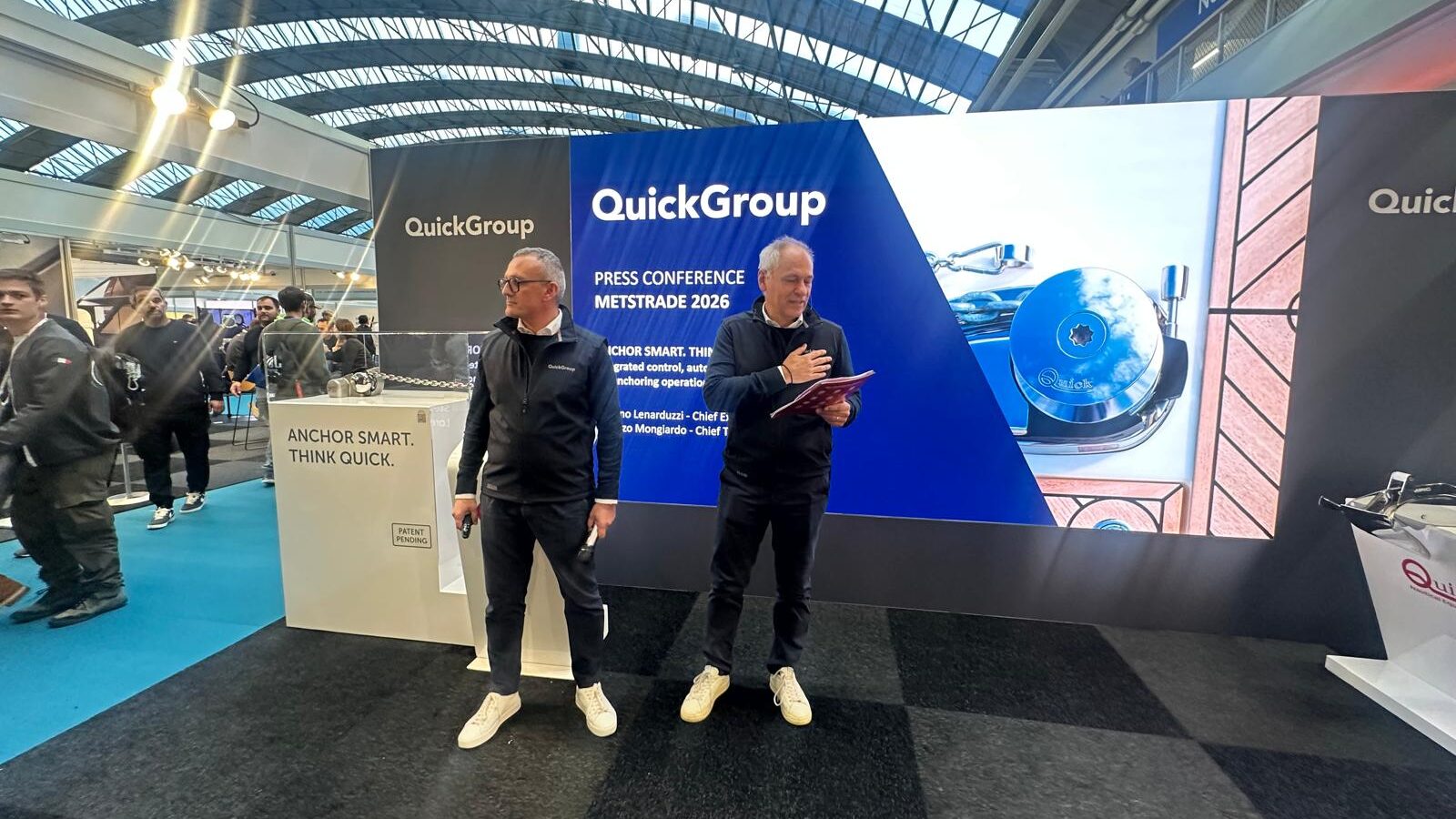
Italian manufacturer and supplier for the yacht and superyacht sectors, Quick Group, has introduced its Intelligent Anchoring System at Metstrade 2026, which runs from 17 to 19 November at RAI Amsterdam.
Quick Group delivers approximately 30,000 windlasses to OEMs each year. The patent-pending system combines proportional windlass control with vessel data and anchoring diagnostics through the company’s QCentric architecture.
Introduced at Cannes Yachting Festival earlier this year, QCentric is an open, scalable CAN bus-based platform that connects Quick Group equipment and supports integration with third-party systems. The anchoring system pairs this platform with the new Pacific W1XL and W2XL controllers, which provide proportional control and monitoring for windlasses.
Speaking at the launch at Metstrade yesterday (17 November 2026), Quick Group chief executive Stefano Lenarduzzi said the smart anchor was inspired by a desire to simplify the anchoring process.
Lenarduzzi stressed that the system is designed to support rather than diminish a captain’s capabilities, making time on the water more straightforward.
“The idea came from me and my wife,” he explained. “When we are out on the boat, we are always shouting from bow to stern about how much chain to pay out, what the depth is, and so on. This product means it’s all easy, at the push of a button.
“[The system] can cover our entire windlass range at the moment. In the end, every kind of boat can be suitable with this solution,” he continues. “Of course, there are some limits now in the first launch in the size of the motors we can pilot.”
The anchor system is currently aimed at the 30-80-90ft market.
Alluding to developments of the scalable CAN bus-based platform and further integration of Quick products, Lenarduzzi says: “New steps are coming, and not only in ease of use, but also in safety.”
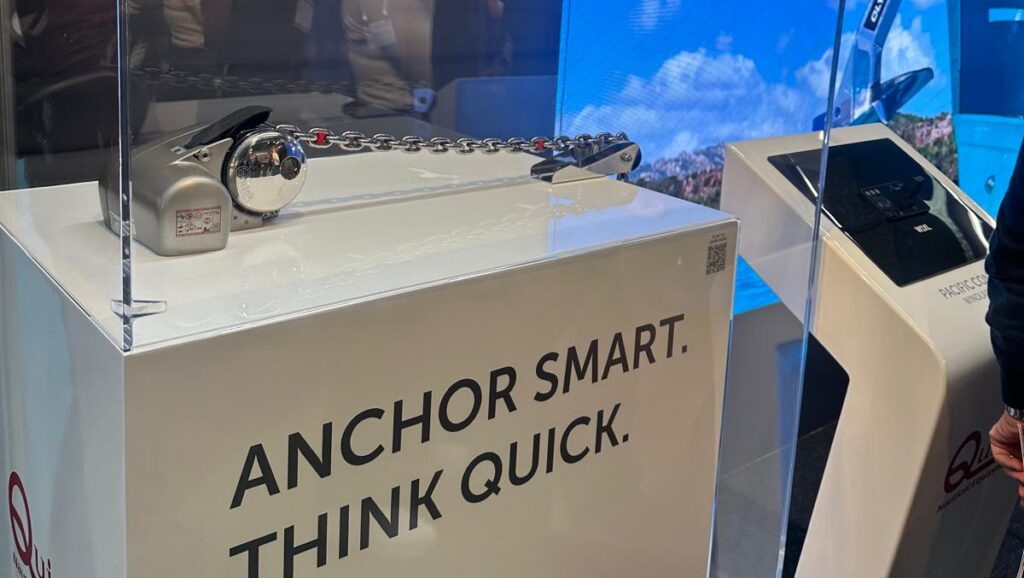
Before the anchor is lowered, the system checks the status of the windlass, chain counter and retention devices. During deployment, it monitors chain length alongside vessel position, speed, heading and water depth. It uses this information to adjust payout speed through controlled acceleration and deceleration.
The system also calculates the required scope ratio using water depth and parameters set by the user. Real-time feedback guides the operator, while the system detects anomalies, unavailable sensors or incorrect operating conditions. Operators can intervene at any stage.
When the anchor is retrieved, the system gradually slows it as it approaches the bow. This is intended to limit impacts and reduce mechanical stress and wear on equipment.
“Our objective was to bring greater intelligence and predictability to one of the most critical onboard operations,” says Lorenzo Mongiardo, chief technical officer of Quick Group. “By combining advanced control algorithms with real-time vessel and anchoring data, we have created a system that supports the crew throughout the entire anchoring process, improving safety, awareness and overall user experience.”
The CAN bus architecture uses a single cable per station and supports plug-and-play connections, including handheld control devices. Operators can also view system information on standard multifunction displays at the helm.
The system works with standalone or dual-windlass installations. Integration with third-party equipment through the NMEA 2000 marine network standard provides scope to connect anchoring operations with engine controls, thrusters and steering gear.
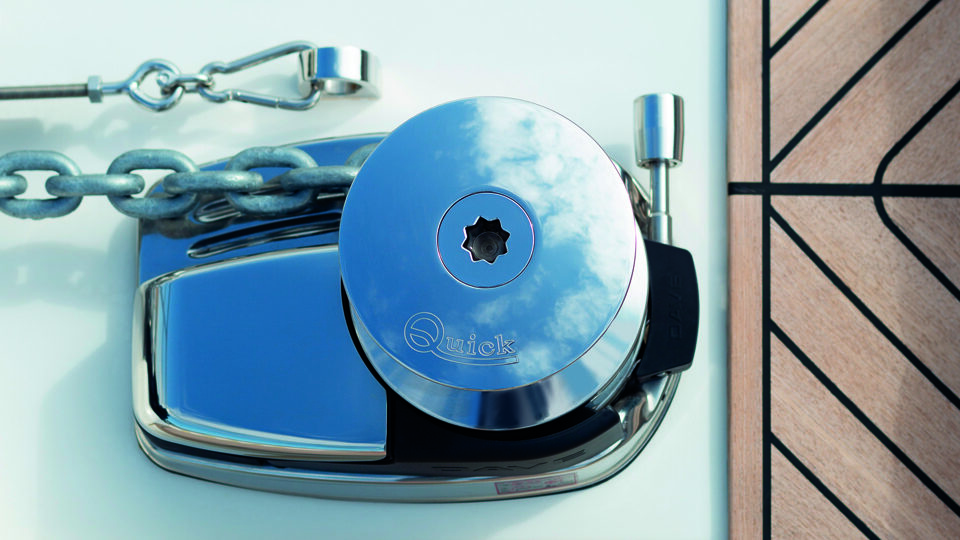
Wider product range
“By improving comfort, safety and control through the entire anchoring process, and by enhancing operator awareness while at anchor, the Intelligent Anchoring System marks a significant step forward for the boating sector,” says Lenarduzzi. “It also represents the next step in Quick Group’s journey toward increasingly connected and intelligent onboard systems. By leveraging the QCentric ecosystem, anchoring becomes an active part of the boat’s digital infrastructure.”
The anchoring system follows several product updates during 2026. Quick Group extended the warranty on its Quick Gyro stabilisers from two to four years at the start of the year, following development work on their mechanical systems, electronics and control algorithms.
At Cannes Yachting Festival, the company added units and a new 215mm tunnel to its QSY brushless proportional thruster range, which covers smaller boats through to large yachts. It also introduced its Pacific controls for use with the QSY thrusters, with a digital interface and plug-and-play installation.
Quick Group is exhibiting across three stands at Metstrade, where its team is discussing QCentric and the first stages of the anchoring system. Stands 01.153 and 01.251 in Hall 1 feature products from across the group, including lighting, QSY thrusters and Pacific controls, alongside Nemo doors, hatches and ports.
Stand 07.120 in the superyacht hall displays equipment from Sanguineti and Nemo, as well as the XR8 windlass. The latter is fitted to recent yacht launches including the Azimut 44M.

MIN at Metstrade
Marine Industry News managing editor Zella Compton, editor Chantal Haines and publisher Mike Shepherd are all attending Metstrade 2026. Come and find us at stand 01.683 and pick up a free copy of our latest print issue, or get in touch.
The post Quick Group introduces intelligent anchoring system at Metstrade 2026 appeared first on Marine Industry News.