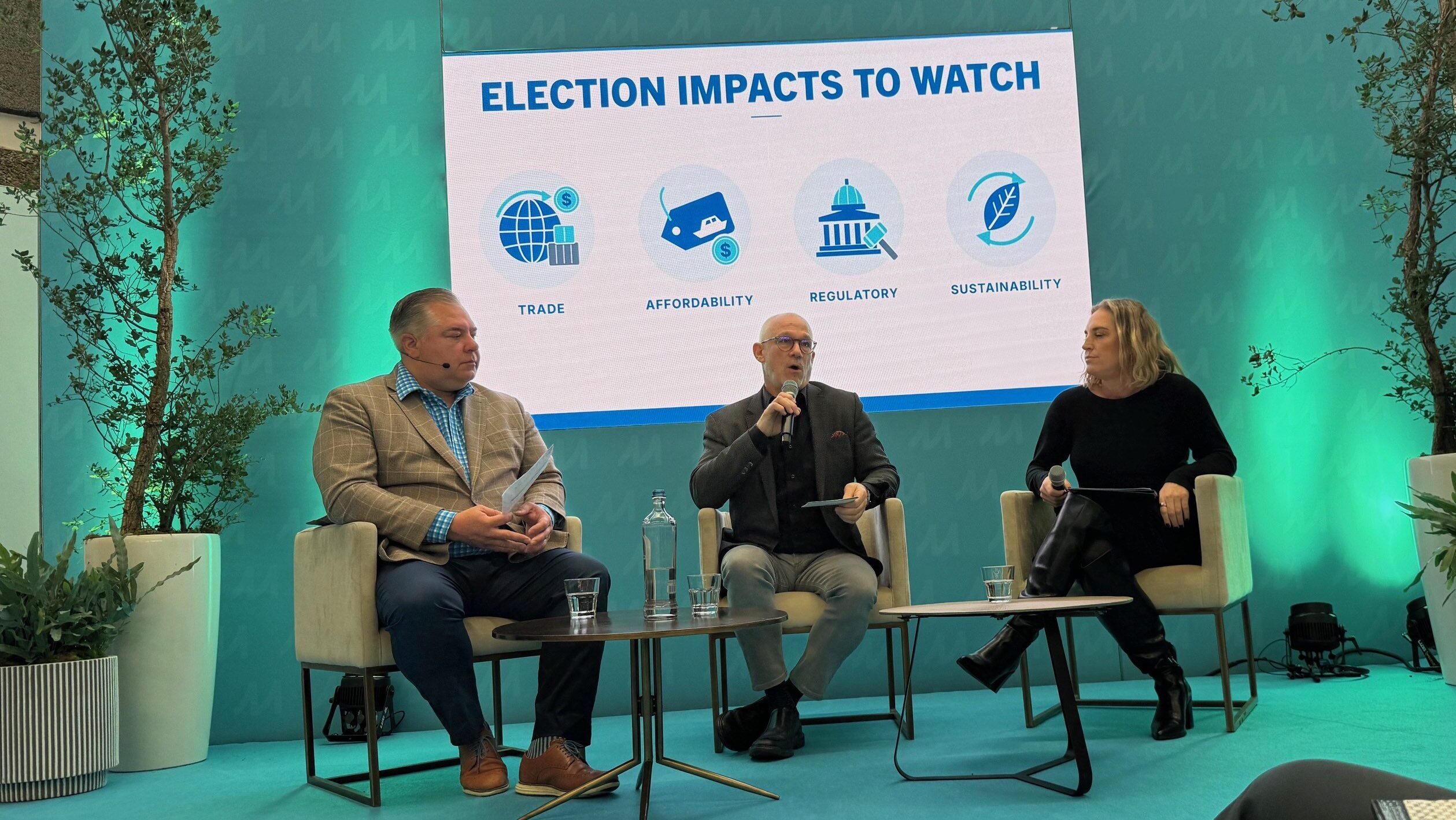
“This was the largest political shift in the United States in over 50 years. It really is unprecedented (at least my working lifetime),” says Frank Hugelmeyer, president and CEO, National Marine Manufacturers Association (NMMA) on the recent mid-term election results in the US. He was speaking at Metstrade.
In early November the political landscape in the US shifted significantly following mid-term elections. Democrats took control of both the House of Representatives and Senate while President Donald Trump remains in office. But the change in congressional leadership is likely to have implications for US trade relationships with Canada and other international markets with significant implications for Republican strategy ahead of the next US presidential election, potentially forcing the party to reconsider how it appeals to voters nationally.
However, Hugelmeyer argues that the president’s recent choices (for example his pick of Stephen Miller as new chief of staff) signal continuity rather than a change in direction.
“You can expect him to continue to do what Donald Trump does, which is walk his own path.”
With this in mind, Hugelmeyer says congress is a key factor in the future of global trade and the boating industry, particularly over tariff policy. While the administration negotiates tariffs, congress holds approval authority.
He expects the new congress, due to take office in January, to seek to reassert its authority over trade policy and ensure that trade agreements with other countries are enforced. However, Hugelmeyer anticipates tension between congress and the president.
“You can also expect Donald Trump to ignore that [congressional oversight].”
Therefore, tariff policy is likely to remain a major political issue, particularly as Democrats focus on affordability and seek to challenge measures they believe are increasing costs for US consumers and businesses.
Hugelmeyer also highlights tensions surrounding renegotiation of the United States-Mexico-Canada Agreement (USMCA), originally negotiated during Donald Trump’s first administration and now subject to renewed negotiations under his current administration.
“You can expect that congress is going to play a much more influential role there, and that’s a big deal for the boatbuilders in the US certainly, because 50 per cent of all boat exports in the United States go to Canada.
“What’s been happening between the trade agreements and the rhetoric that’s been going back and forth between the US and Canada during this time has really impacted the ability for US products to be sold in Canada. And, we’ve seen that impact.”
Tax policy to impact boatbuilders
Tax policy is expected to become a major focus of US political debate, with Democrats likely to challenge planned Medicaid cuts included in the so called ‘one big beautiful bill’, which are scheduled to take effect after the end of the year. This could prompt the introduction of a new tax package as Democrats seek to address the issue on which they campaigned.
“The ‘one big beautiful bill’ had a big positive impact for marine manufacturers.”
Hugelmeyer. continues: “There were big investments and tax reductions – R&D tax incentives. The corporate tax level was held at a competitive rate globally. There were a lot of positives for the marine industry on the small business side of that.”
Regulatory threats fightback to continue
Hugelmeyer says the industry has made progress in addressing what it considers major regulatory threats, highlighting the proposed inclusion of styrene on the US Toxic Substances Control Act (TSCA) priority watch list towards the end of the Biden administration. He warns that styrene is a critical component in fibreglass boatbuilding and that restrictions or a potential ban would have significant implications for manufacturers.
“You cannot build a strong, durable fibreglass boat without styrene. You ban styrene, you ban boat building in the United States of America, the largest market in the world.”
The industry is working with the US administration to secure an exemption for styrene used in boatbuilding under potential TSCA restrictions. He says the substance is being targeted largely because of its use in single-use plastics and products such as polystyrene foam, but argues that its essential role in fibreglass boat construction warrants separate treatment. He reports progress towards securing an industry exemption.
Vessel speed regulations also remain an ongoing area of focus for NMMA.
NMMA has challenged proposals that could restrict vessel speeds to 11 knots along the US Atlantic seaboard for up to nine months of the year to protect right whales, arguing that existing technology could provide an alternative to mandatory speed limits.
“The administration has been very helpful on that front.
“The stability of the ongoing Trump administration is going to help us be able to get those two big issues across the finish line and protect the industry long term, and that’s very important.”
The challenge will be that members of the current administration leave.
“The marine industry would be in a position where we have to reintroduce these issues to new people who may or may not want to move them fast. We’re really on a timeline of dealing with these regulatory issues right now. We have a good path, and we’re hopeful.”
Hugelmeyer expects sustainability to come forward on the agenda, with congress starting to move toward legislation in hearings – but due to the likelihood of presidential veto – not in actual policy.
US market has resilience
The largest segments of the US recreational boating market – personal watercraft, freshwater fishing boats, pontoons and saltwater fishing boats – are showing relative resilience, he says. Freshwater fishing boat registrations, which include bass boats, are flat year on year, while several entry-level categories have begun to recover after struggling in recent years. The strength of these larger-volume segments is helping limit the overall market decline to around 3–4 per cent, despite continued pressure elsewhere.
“Some boat builders are doing very well. Others are struggling more.
“Your strategy as a brand really matters right now in this market.”
The upper end of the US boating market has remained relatively resilient, with larger cruisers, higher-value saltwater boats and premium pontoons continuing to perform well. The greatest pressure is at the entry level, where affordability is limiting purchases among more price-sensitive consumers. Hugelmeyer said this shift is reflected in growing demand for alternative access to boating, including boat rental and membership clubs.
“The affordability issues are a great concern and it’s not just in daily goods like energy, inflation, and cost of goods at home. The housing market is seeing this, a very similar impact that we’re seeing here. And quite honestly, we’re at a consumer confidence in the United States right now that’s been at, you know, 50-year lows.”
“All of that played out in the recent election results that everyone heard.”
Hugelmeyer was joined on stage by Marie-France Mackinnon, executive director NMMA Canada, and Robert Newsome, NMMA’s chief administrative officer and senior vice president of operations.
The post US political shift has major implications for marine industry, says NMMA president appeared first on Marine Industry News.