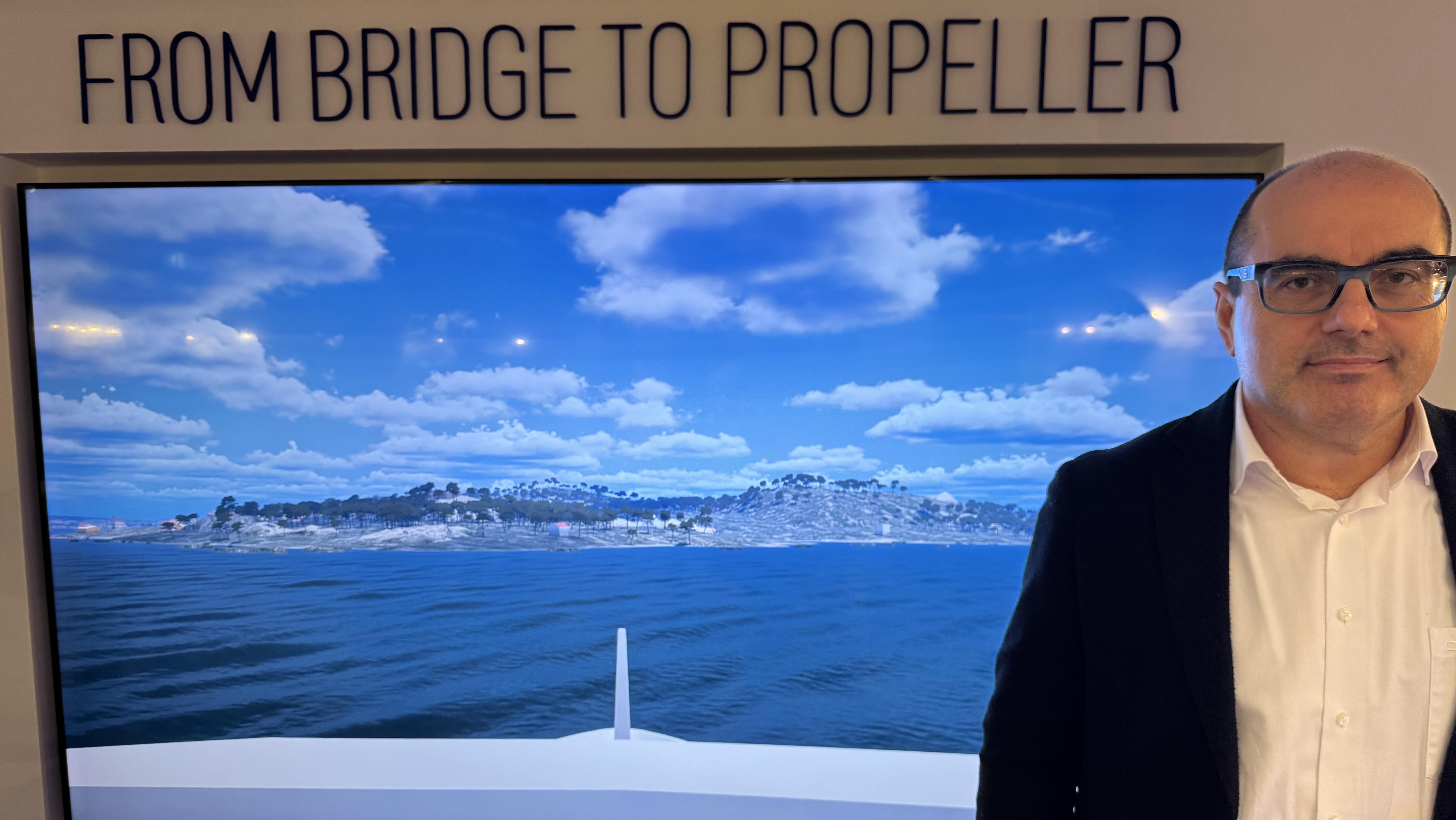
“From automation and bridge, historically our focus was mainly on the mega yacht sector,” says Christian Paolini, MD and director of sales for Team Italia Marine at Rolls-Royce Power Systems.
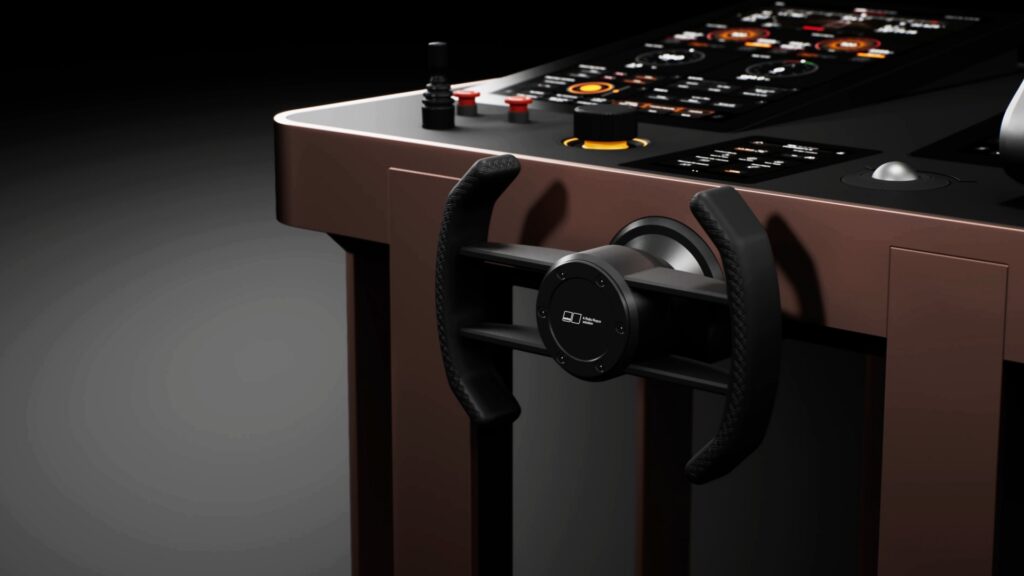
Paolini heads the automation department and oversees MTU NautIQ Bridge and MTU NautIQ Master Essential. NautIQ Bridge brings navigation, vessel monitoring and control together on one platform, while NautIQ Master Essential handles alarms and monitors and controls essential onboard systems.
Speaking to MIN at Metstrade 2026, Paolini explains where the company has focused its bridge-to-propeller strategy over the past three years.
“More and more on the serial production yacht between 30 and 40 metres, where our engine population and penetration in the market is quite strong.”
For Paolini, the appeal lies in the higher production volumes these yachts offer.
“The price of the solution is lower because the [serial] boat is lower in terms of complexity. But the production flow is quite high compared with 60, 70 metre yachts. So then you can use the scale effect to increase the volume of the business.”
Price and size sensitivity
He explains: “As you go down in size, the market becomes price sensitive.” He describes this shift as “a little bit more complicated,” because “when you have a high technology solution, usually the price is higher than a standard solution.”
“But we are seeing more and more requests in terms of technology and integration in smaller boats, because this kind of solution is the ideal platform to integrate new features.
“If you have an integrated bridge system on board, even after the boat is delivered, you can easily upgrade and install new tools without touching anything in the wheelhouse.
“So for the owner it’s a huge advantage. Basically, you have a platform that is future ready.”
More information about the company’s offering is available on its website.
Positioning as complete solution provider
He says Rolls-Royce is positioning itself as a complete solution provider, first for shipyards and then yacht owners. By offering a single point of contact for bridge, automation, engines and propulsion, supported by a global service network (which it has effectively been developing for decades) and tailored service packages, it aims to support customers throughout the yacht’s lifecycle.
Another benefit which Paolini sees in supplying complete systems to serial production boats is that working with yards producing large custom yachts can involve multiple stakeholders.
“Usually, when you deal with a shipyard for the engine, you are speaking with one stakeholder.
“When we have to speak about automation and bridge, you are speaking with different stakeholders, different departments. So it’s not easy to bring all together.”
The timeline is also easier with serial production. Shipyards typically discuss engine requirements first, as engines are installed early in the build process, followed by propeller solutions, automation and bridge systems.
“The bigger the boat, the more time you have to wait to discuss the bridge.
“It’s difficult to discuss the bridge, automation and engine at the same time.
“Because the production flow of the shipyard goes in a specific way, they are not usually willing to discuss everything together, so they want to start with the engine, and then you go ahead with automation and bridge.”
Paolini continues: “For serial production, [boatbuilders] define the complete package of the system at the beginning of the project, and then they replicate it across three to four years. Usually the production flow is around four years for a specific model.”
Further strategy expansion
Now Paolini is focusing on entering more markets outside Italy with the bridge-to-propeller strategy.
“In Italy we are already quite successful with our strategy.”
Rolls-Royce currently works with three of Italy’s largest yacht builders – Sanlorenzo, Ferretti and Azimut – as well as smaller shipyards building yachts between 40 and 60 metres. It has secured four projects in Turkey over the last three years, with one ongoing and another under discussion. The company is also in advanced discussions with shipyards in the Netherlands, UK and Germany, including opportunities in series production.
“The first step is in Europe, and then after 2027, maybe also outside Europe.”
He’s looking at shipyards in Asia – mainly Taiwan – and also in the US.
“It’s a quite different market compared with the pleasure yacht; the focus is on the sport fishing boat, but we started some discussions also with some players over there.”
Adding AI and other developments
That future also looks like the addition of AI tools. Rolls-Royce is developing innovation within its existing business, with an increasing focus on AI. Earlier this year, at Monaco, it presented an AI agent designed to manage onboard documentation and reduce complexity for captains and operators. It’s also developing AI applications to support its internal business operations, says Paolini.
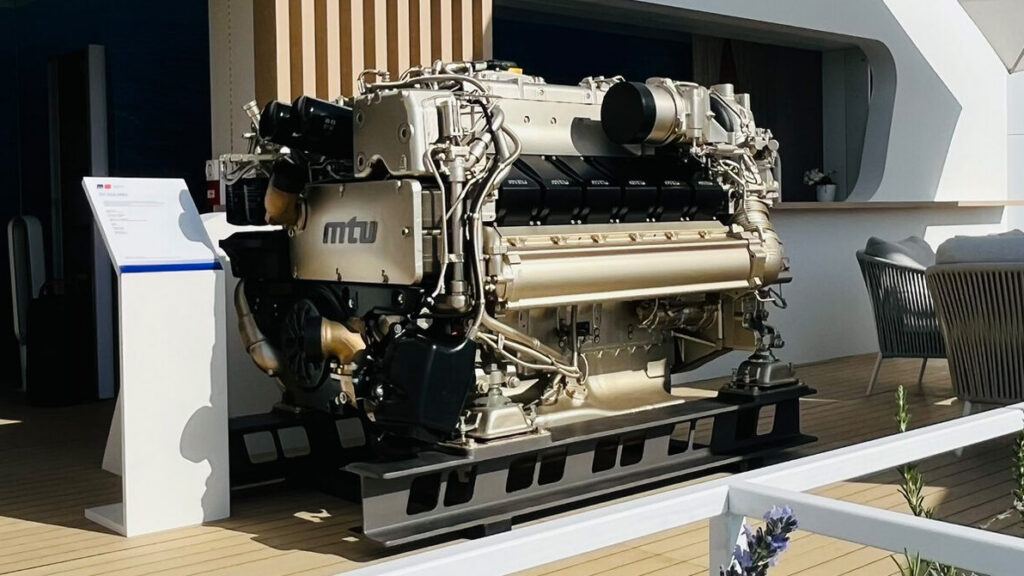
The company launched its new variable-speed gensets and SCR exhaust after-treatment system at SMM in Hamburg. It previously announced its 12V 2000 M96Z engine in May 2025, with increased power density.
“From the engine, we expand our product portfolio from bridge through automation, engine and propulsion with pod,” he says.
Product development has come in part from its 2023 acquisition of Team Italia Marine, specialists in bridge and automated solutions. Rolls-Royce has gradually integrated the company into its processes and product development to improve integration between bridge, automation and engine control systems.
Paolini says the process is going well, with a deliberately measured approach to avoid disrupting the smaller business. He adds that Rolls-Royce Power Systems has acquired several companies across marine, power generation and other markets over the past five to six years to support its growth.
The post Rolls-Royce looks beyond superyachts to unlock growth in smaller boats appeared first on Marine Industry News.