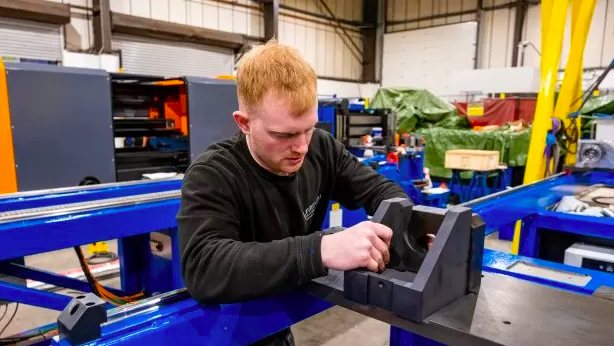
A £725 million investment to deliver more apprenticeships for young people has been announced by the UK government. The idea is to help eligible young people (under 25) to benefit from increased access to training.
It looks like the government will pay 100 per cent of the training fees (up to set limits) for small businesses taking on young people (aged under 25), removing the usual five per cent employer contribution, to boost youth training. The wider perspective of the announcement is contained in a media release and further details of how this will work – including exclusions and priorities bound up in the overall announcement – are expected shortly on the government’s website.
The government says that 50,000 young people across the country will be better equipped for jobs of the future through a major investment to create more apprenticeships and training courses.
Funding aims to create ‘real’ pathways into employment
“This funding is a downpayment on young people’s futures and the future of the country, creating real pathways into good jobs and providing work experience, skills training and guaranteed employment,” says work and pensions secretary Pat McFadden.
“The reforms are designed to tackle the sharp decline in apprenticeship starts among young people over the last decade – which have fallen by almost 40 per cent since 2015/16 and shift the focus towards supporting young people into high-quality training and employment.”
That’s all very well, and potentially exciting given the dire warnings across the marine sector about the lack of young people entering the boatbuilding profession (three major reports in recent years have highlighted the skills shortage in traditional boatbuilding, including work by the Craft Association and Wooden Boat Trade Association, the National Shipbuilding Office and National Historic Ships and earlier this year traditional boatbuilders united to address the UK issue), but there’s another issue looming.
Some SMEs can’t afford wages for apprentices
A steep rise in the apprentice national living wage is prompting warnings that many SMEs can no longer afford to run apprenticeship programmes. Chris Houston, managing director of Tadweld (a specialist engineering and fabrication business), recently told MIN the 66 per cent increase over two years “makes offering apprenticeships exceptionally expensive,” raising concerns at a time when many industries – like the marine sector – are facing the long-term skills shortage challenge. The financial issue is emerging against a backdrop of higher business costs across the UK, including recent increases to corporation tax, National Insurance and the National Living Wage.
Apprenticeships – central to UK industry since the 16th century – have already been affected by wider policy changes. The introduction of the Apprenticeship Levy in 2017, combined with long-standing emphasis on university pathways, contributed to a decline of 170,000 apprenticeship places between 2014 and 2024. Although interest from young people has recently stabilised and begun to rise, businesses from many sectors say the latest wage increases are reversing any progress.
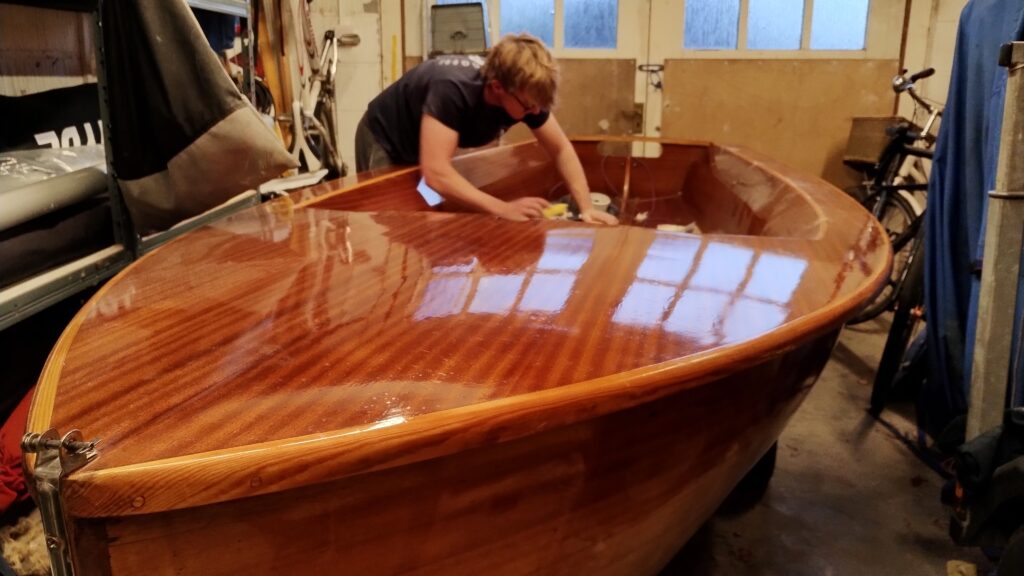
Cumulative increase of apprentice wages a barrier
Houston explains that while Tadweld pays apprentices for both workplace training and college attendance, the rising minimum wage has changed the economics. “In 2023 the minimum wage for an apprentice welder was £6/hour… in 2024 the apprentice NLW increased to £7.50/hour, and then in 2025 it increased to £10/hour,” he says. With under-18 minimum wage rates set to rise again in 2026, he describes the cumulative increase as a major barrier for SMEs.

Too expensive to train apprentices in manufacturing workforce
Manufacturers reports similar pressures. Alan Pickering, managing director of Unison, says the company will not offer an apprenticeship position this year for the first time in over 25 years. “Unfortunately, the recent changes have made it too expensive to train apprentices,” he says, highlighting concerns for the future of the manufacturing workforce.
Unison manufactures all-electric CNC tube and pipe bending machines that are used in shipbuilding and other marine applications. It has supplied machines to the marine industry for tasks such as creating pipes and other structural components, and has even built the world’s largest all-electric tube bender for shipbuilding.
Houston adds that the UK faces demand for 35,000 new welder positions in the next five years, while only 231 welding apprentices were trained in 2024. He argues that rising employment costs undermine efforts to address national skills gaps.
British Marine responds to government’s decision
British Marine says it welcomes the government’s decision to make apprenticeship training free for SMEs employing under-25s. Lesley Robinson, CEO, British Marine says: “This is a positive step that helps remove barriers to entry for employers, enabling more businesses to take on apprentices, which in turn will help bring new talent into the sector, and strengthen the long-term skills pipeline our industry needs. We will continue to keep our members informed as and when further details are released and as the changes come into effect.”
Prime minister Keir Starmer adds his ambition is to “get two-thirds of young people in higher-level learning or apprenticeships.
“For too long, success has been measured by how many young people go to university. That narrow view has held back opportunity and created barriers we need to break.
“If you choose an apprenticeship, you should have the same respect and opportunity as everyone else.”

The post UK government announces apprenticeship investment but SMEs warn rising wage costs are unsustainable appeared first on Marine Industry News.