Lithium batteries have become the headline villain in yacht fire conversations, but according to Fireboy chief operations officer Robert Aldous, the data tells a very different story. While new propulsion systems and alternative fuels are changing the way vessels are designed and operated, most marine fires still begin in far more familiar places. As the sector moves toward hybrid power and zero-emission goals, the real challenge isn’t panic — it’s precision, regulation and realistic risk management.
“Despite what many people believe, we’ve seen no evidence of an increase in lithium-related yacht fires,” says Fireboy’s Robert Aldous. His company makes marine fire detection and suppression technology.
“In the recreational market, most fires still originate in engine rooms, from fuel leaks onto hot surfaces, or from faulty charging systems. The move away from propane for cooking has reduced incidents significantly.”
As alternative fuels, hybrid propulsion and onboard energy storage become increasingly common, fire safety is one of the most complex challenges facing the marine sector. Fireboy works across commercial, leisure and superyacht markets worldwide.
Aldous isn’t expecting to see any major movement in fire detection technology during 2026. Detection in the commercial marine sector is governed by SOLAS, and the relevant section of the FSS Code is minimal and difficult to change.
Alternative fuels and regulatory uncertainty
“Where I do expect change is around gas detection. The industry’s drive toward zero-emission shipping has brought methanol, ammonia and LNG firmly into the conversation, even if uptake has been slower than many forecast.
“Diesel will remain the dominant fuel for a long time.
“But the regulatory uncertainty around these emerging fuels is already affecting the way systems are designed. Notified bodies do not currently provide prescriptive rules – they ask system designers to provide suitable solutions based on the particular hazard and will evaluate and decide whether to approve or decline.”
And this creates challenges for all manufacturers, especially when so many alternative-fuel projects sit behind NDAs.
Gas detection as the next major shift
That said, Aldous (pictured) is expecting carbon monoxide detection to become mandatory for recreational craft in the near future (information about Fireboy’s detection systems is available on its website). “It’s a silent killer on land and at sea, and the risk is often from a neighbouring vessel’s generator rather than a boat’s own equipment. There is currently an ISO working group looking at this area, and it’s clear the industry recognises the need for action.

“Lithium battery regulation is also evolving. In the UK, MGN550 provides the MCA’s current lithium guidance, but there is still no regulatory clarity around fuels such as ammonia, hydrogen, methane and methanol. Meanwhile, work on the next edition of ISO 9094 is currently in consultation and yet to be agreed on lithium installation best practice.”
Lithium batteries, containment and thermal runaway
He mentions that fire detection has historically lagged behind risk. “Only two or three years ago, a 100ft recreational vessel did not legally require fire detection in any form. This was addressed by adding into ISO9094:2017.
“As lithium systems become more common, the entire sector is shifting towards cooling and containment. No manufacturer can guarantee extinguishing a lithium battery in full thermal runaway – not us, not our competitors, not anyone.
“The objective is to prevent the spread long enough for the vessel to reach shore safely and let the fire brigade deal with it.
“Regulators are already acting ahead of formal standards. DNV, for example, will not allow a gas-only system for a battery room. Water-based solutions (particularly low-pressure water mist) are becoming the preferred approach because they are efficient, require far less stored water than sprinklers, and create an inert steam layer when activated.”
Why detection is evolving faster than suppression
Aldous notes that battery technology is improving, with cobalt-free LFP cells and better battery management systems reducing the chances of thermal runaway. “But detection is where we’re seeing the fastest evolution: heat, humidity, temperature and lithium-specific gas monitoring are increasingly being combined into integrated PLC-based systems.”
The hidden risk of shore power and charging infrastructure
While all these developments are ongoing, Aldous shares his concern – which he deems ‘major’ – about the charging infrastructure.
“Many marinas – and even some commercial ports – simply don’t have the electrical capacity to support hybrid or electric vessels safely. In my experience, shore charging faults are more common causes of incidents than the batteries themselves.
“Saltwater contacting battery management systems, poor-quality chargers and heat accumulation in engine rooms also play a role. To reduce risk, many builders are now enclosing batteries in fire-rated boxes with drainage for continuous cooling, and installing far more sophisticated monitoring systems than we saw even a few years ago.”
How builders and regulators are reshaping fire protection
Fireboy is careful who it works with. “On every project, the first thing we ask is: who is the battery manufacturer? We then speak to them about their safeguards, although around 90 per cent tell us they don’t require additional protection.
“Authorities such as the MCA usually take a different view, and until battery manufacturers can prove a fully fail-safe system, additional measures will continue to be required.”
Plus, the company’s collaboration with boatbuilders is constant. “They come to us with a design and the regulatory framework they’re working to, and we tell them what’s required to comply. In 20 years, we’ve never had a vessel fail approval due to a system we designed.
What meaningful change really looks like for 2026
“Looking ahead into 2026, we’ll continue expanding our low-pressure water mist offering across battery rooms, accommodation areas and machinery spaces.” This system was launched during Metstrade. “With potential changes to some Notified Body Yacht requirements lowering the threshold for accommodation water-based protection below 500GT, there is a significant new market opening in front of us.”
When it comes to meaningful changes, Aldous is looking at broader adoption of low-pressure water mist, hybrid gas/water protection for battery rooms, and more comprehensive multi-sensor detection systems.
“I don’t expect dramatic technological breakthroughs in the short term. Many ‘new’ products on the market are simply water-based systems with additives, and most are tested only on small household-type batteries, not the large banks used for marine propulsion, or hotel services.”
As yachts evolve, fire safety is no longer about chasing dramatic breakthroughs or reacting to the latest headline risk. Instead, it is becoming a discipline of integration — combining smarter detection, practical containment and infrastructure that can support the vessels of the future. For Aldous, the path forward is clear: understand the hazards, design for reality, and give crews the time they need to reach safety when it matters most.
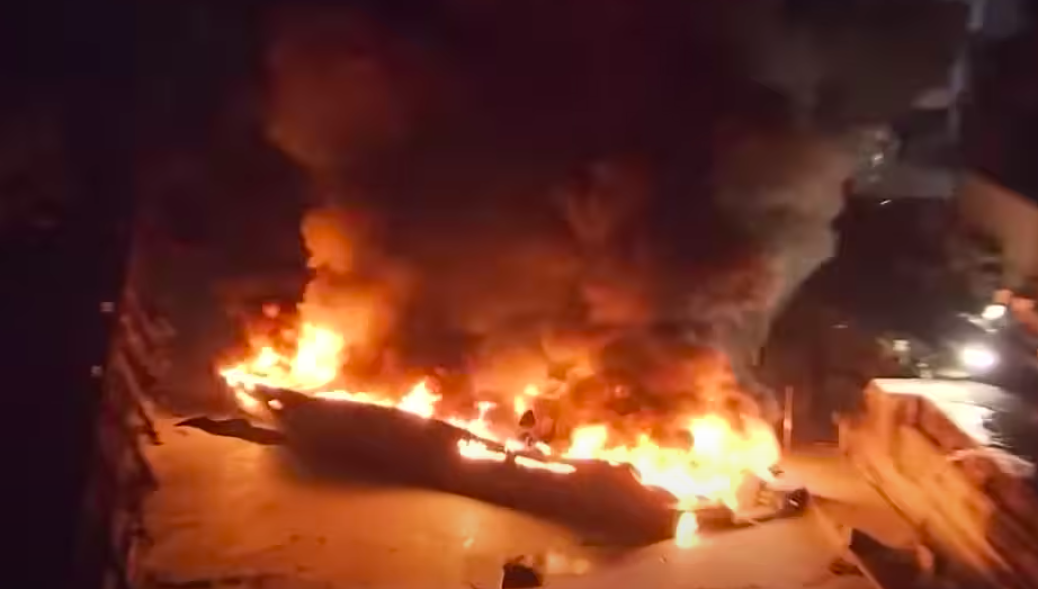
Main image above used for illustrative purposes only and taken from story below.
The post Lithium isn’t the real fire risk on yachts, says Fireboy appeared first on Marine Industry News.