Dan Hook, CEO of RAD Propulsion, says more collaboration and working as ‘Team UK’ – rather than in silo – is needed to expedite growth in the electric marine market.
Rich Daltry and Dan Hook founded RAD Propulsion in 2018 – the duo having previously built and developed advanced marine robot boats for the offshore industry, defence and oceanographic sectors.
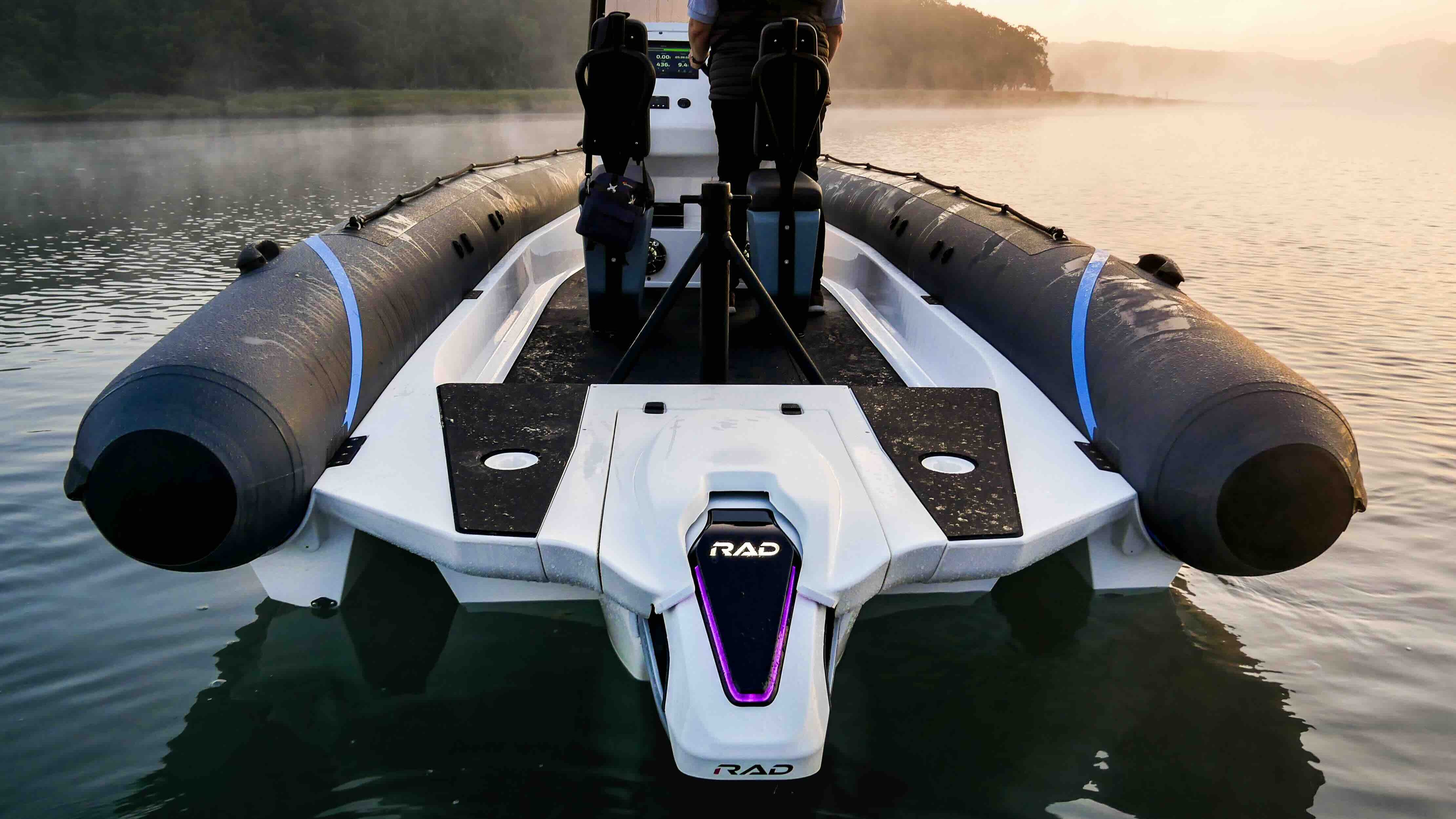
The company now boasts an expanding team and RAD is making its name building electric propulsion systems. In November 2025, the manufacturer launched the RAD 120 – a new electric drive system developed in response to the increasing requirement for higher power marine propulsion at Metstrade.
Headquartered in the UK, the CEO has a unique perspective on the marine market and is keen to highlight areas where potential for growth is clear.
How would you characterise the UK marine market currently?
“One of the things I love so much about the marine industry is how hard this question can be to answer. It is such a diverse sector with everything from defence, to major infrastructure programmes, to fishing, surveying and leisure.
“From our experience at RAD, the commercial and defence sectors are very busy with lots of programmes in action and seemingly most businesses in those sectors announcing new services and product offerings.
“The leisure sector is arguably quieter at the moment but taking the chance to evaluate product-customer fits, business models and what the changing demographic in that sector means shows such as Seawork, Ocean Business and DSEI have all been very buoyant.
“The UK is very capable in the areas of specialist boat design, composites, software, tech products and, in particular, areas such as maritime robotics and, of course, electric propulsion.
“We export almost half of what we build at the moment so that has been strong and it has mainly been the commercial and defence side performing well in the last 12 months.”
How has customer demand changed over the past year?
“It is always good to see what designers and yards are coming up with for their new generations and offerings. We have seen a good increase in the use of HDPE for boats. There’s more availability of CNC machines for ever better moulds, making some of the GRP/composite offerings even better and, of course, aluminium as a proven workhorse material.
“With our focus on electric/hybrid boats and lots of work in the maritime autonomy space we haven’t worked with many steel vessels, but hope to change that.
“Although still not as quick as we would all like, there is undeniably a trend towards more electric and alternative energy vessels. We are seeing this at the end-user level where it’s being included in tender documents, and that flows through to the designers and yards.”
What indicators are shaping your outlook for 2026?
“We are optimistic. Generally in our business, with the lead time for design work and boatbuilding, before they install drives, batteries and control systems, we get a good look ahead at what’s coming up.
“We’ve seen lots of designs and programmes that will be launching in the next 12-18 months. We’re definitely travelling lots and growing our presence with partners in different countries and this has helped buoy our optimism.”
Rad Propulsion is also busy ramping up collaborations and partnerships. In 2025, the manufacturer worked with Savvy Navvy – partnering on power management data with smart routing navigation, and renewable energy firm Seavolt in Australia.
What are the biggest challenges currently facing your business?
“A range of challenges exist, like in any growing sector, but none that can’t be worked through without sufficient time, planning and effort.
“There are processes for regulation and compliance, investors can see the potential in this space when it is explained to them, pricing can be managed by looking at whole life cycle costs and working hard with the supply chain.”

Does the industry receive adequate government and policy support compared with other manufacturing sectors?
“Announcements like the September 2025 notice from the DfT and InnovateUK about their ongoing commitment (£480m) are well received. My instinct is that compared to its value to the public, government, security and general way of life it probably is still underfunded and it is our job as an industry to work with the various trade organisations (SMI, Maritime UK etc.) and put forward credible plans with evidence to help this situation.”
Which technological advancement will have the biggest impact on your business in the next five years?
“There are several but to pick one, the ongoing development of battery technology. In a relatively short period of time (<10 years) we have seen battery/electric boats and hybrid boats move from unviable to absolutely viable in many applications.
“The pace of investment from the large battery and automotive companies over the last decade is unprecedented, and much of what they have been working on is still to reach marine. I expect to see increasing numbers of applications ‘make sense’ electrically, based on energy density and cost combinations.”
Is the industry doing enough to collaborate on sustainability infrastructure?
“I think the answer to this should be ‘not for a long time yet’. There is always more to do and we can’t get complacent. We could definitely link up on more tasks that are bigger than any one organisation can achieve.
“Co-ordinating them isn’t easy, splitting the costs and profits can be difficult, but the marine industry is full of great and motivated people who want to get stuff done.”
The post RAD Propulsion CEO: Defence and new initiatives are key appeared first on Marine Industry News.