MIN meets five innovative marine startups that are embracing cutting-edge technology, digitalisation and sustainability. What problems do they solve? What’s next? And what partnerships will drive the next phase of development and scale up for the businesses?
Having showcased at Metstrade Startups – a collaboration between Yachting Ventures and Metstrade – the companies discuss their road ahead and what they aim to bring to the wider marine market in 2026.
Boatee
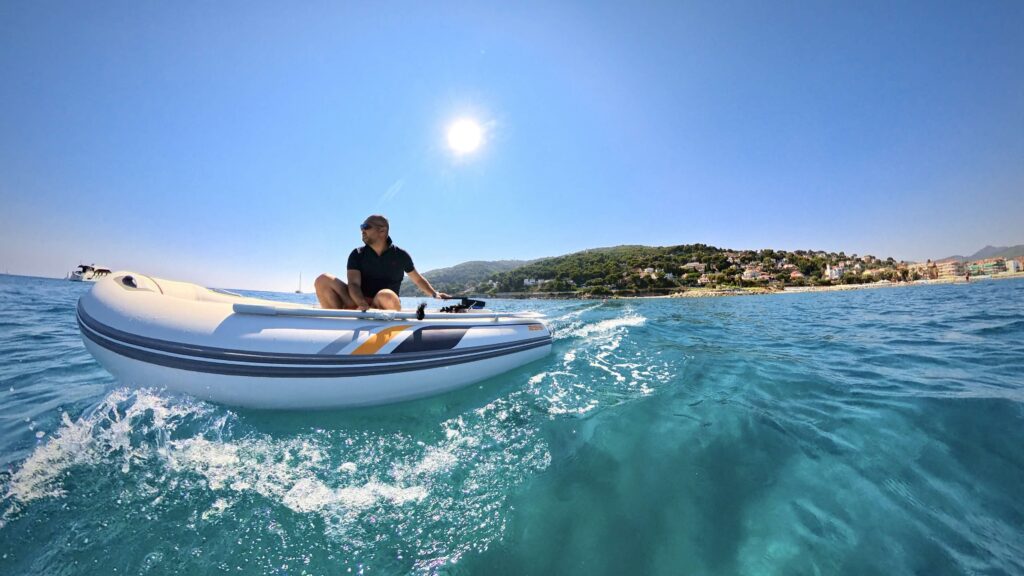
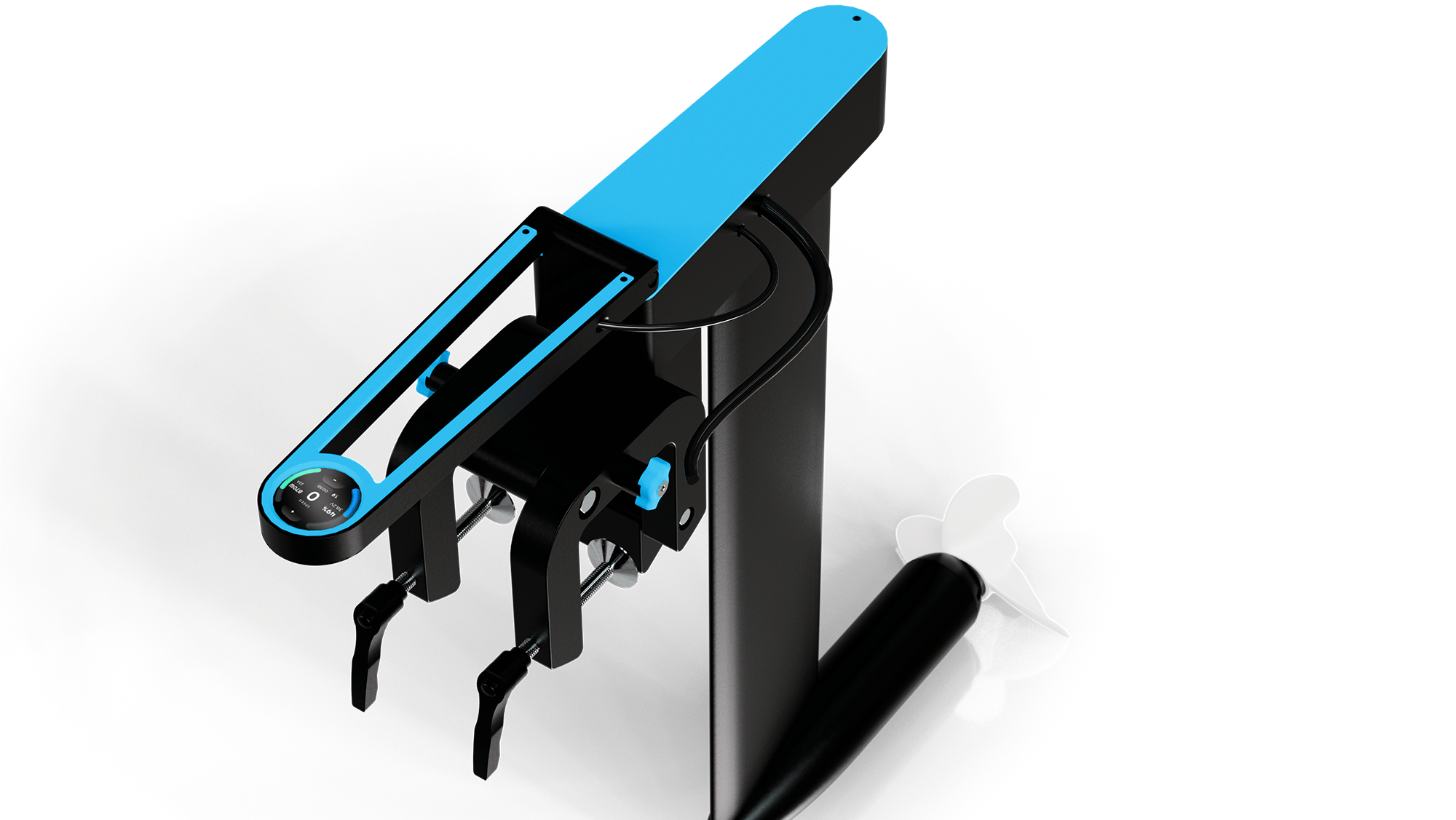
Making its industry and press debut at Metstrade 2025, Italian-headquartered marine startup Boatee is set to enter the market with a lightweight new electric outboard.
“Boatee started because we, as boaters, were tired of heavy, noisy and complex small outboards,” explains Cesare Malescia, founder & CTO. “While the market already has some electric options, we wanted a motor that was radically simpler and lighter. So, we built an electric motor that’s incredibly light, powerful and intuitive. It’s about removing the hassle and bringing back the simple joy of being on the water.”
Boatee’s core focus is the end user, specifically tender owners and small sailboat owners who value lightness and simplicity.
Malescia says the product solves two major user-centric problems. Firstly, weight – at under 6kg, the Boatee motor is light, making it easy for anyone to carry and mount. “This removes a significant barrier to boating,” he adds.
“When people first lift it, they say, ‘That’s it?’ The reaction to its lightness is immediate and validates our core mission. Feedback from the national and international press, as well as the first dealers who tested the prototype, highlighted its superior performance and efficiency compared to existing options on the market.”
But achieving this weight was no easy feat. “On a technical level, our biggest challenge was defying the power-to-weight trade-off. Creating a true 4hp equivalent that weighed under 6kg was an obsession that took intensive R&D.”
Secondly, Malescia emphasises the simplicity of the outboard. “We’ve engineered out the complexity. There’s no fuel, no oil and minimal maintenance. Our design is simple to use and simple to own.”
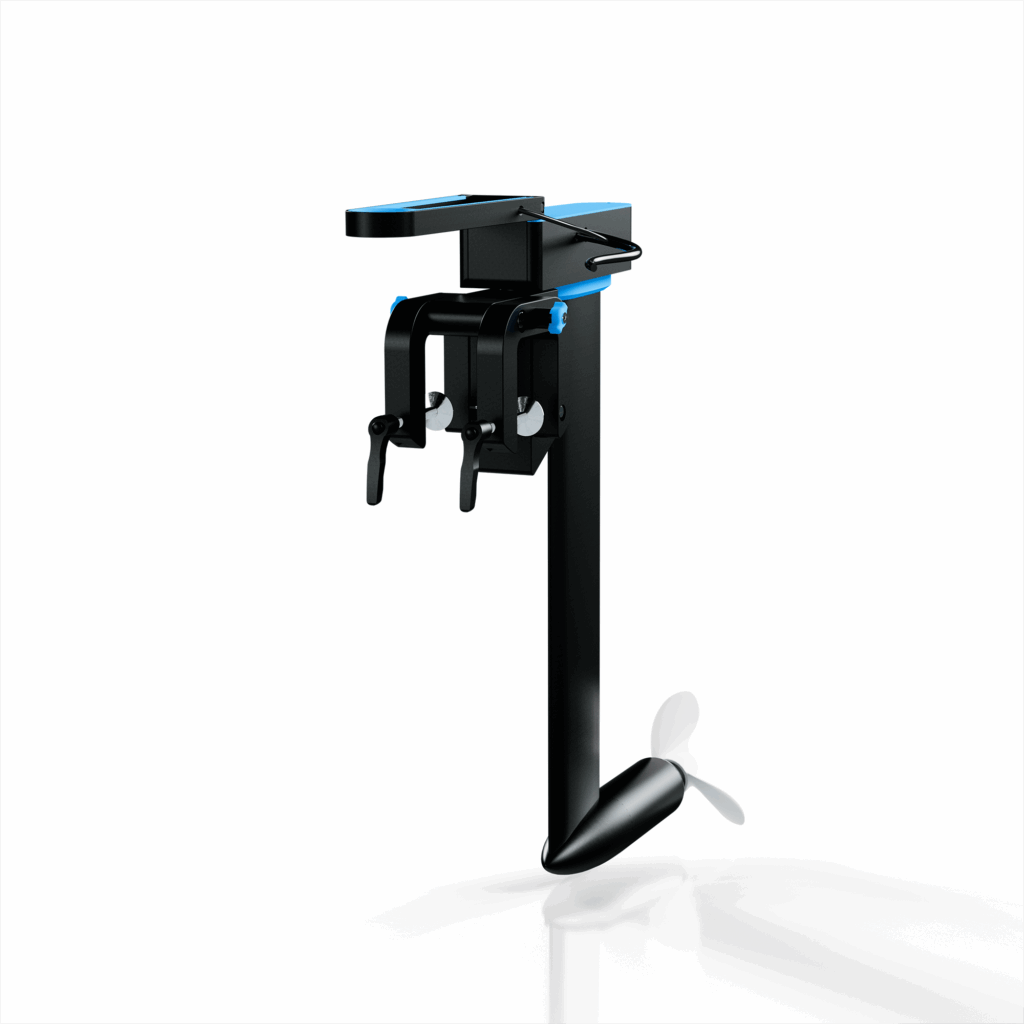
The company has leveraged proven technologies like brushless motors and LiFePo4 cells from other industries, but the application is 100 per cent marine-specific.
Sustainability is, of course, a key driver. “First and foremost, we are addressing the environmental impact of traditional outboards. Recent studies show that over 15 per cent of coastal water pollution is caused by unburned fuel, oil and exhaust from these motors. Boatee eliminates this problem entirely with its zero-emission electric propulsion, helping to preserve the fragile ecosystems we love to explore,” says Malescia
The challenges of startup life are pretty universal but Malescia points to areas where more cohesion could smooth the way in the marine space.
“On an entrepreneurial level, navigating the global certification and compliance landscape is a significant undertaking for any hardware startup. We see this not as a barrier, but as an opportunity for the industry to evolve.
“We are optimistic about a future where streamlined regulations help accelerate sustainable innovation, and we are eager to be part of the conversation that helps shape that progress.”
“We are particularly inspired by the collaborative spirit we see in Northern Europe, where brands work together to make boating more accessible and sustainable. We believe there is a tremendous opportunity to champion this same mindset in Italy. As a country with one of the highest coastline-to-inhabitant ratios in Europe, Italy is perfectly positioned to become a leader in sustainable boating. We see this not as a gap in innovation, but as a launching pad. Our ambition is to be a catalyst for this new wave, proving that Italian design and engineering can lead the charge in creating a more accessible and sustainable marine future.”
Looking ahead, Boatee has clear goals for the next 12-18 months.
“[We want to] successfully launch and fulfill all pre-orders by the end of 2025, build our foundational dealer network across key European markets and finalise prototypes for our more powerful 3kW and 6kW models, expanding the Boatee family.”
Effetto Venturi
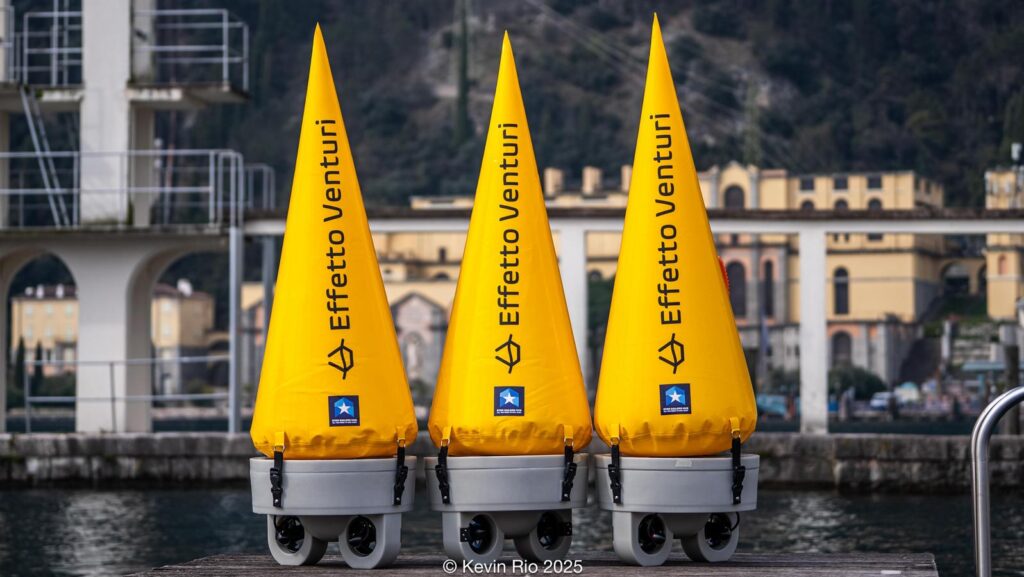
Effeto Venturi is an Italian marine technology startup building an innovative autonomous buoy system known as GiPSy. The buoys are designed to offer a lightweight, precise and sustainable alternative to traditional anchoring for water-based events.
Founder, Valentina Venturi, explains: “We build robotic buoys that replace traditional anchored race marks in watersports. Instead of laying heavy anchors and moving them with boats, our buoys reposition themselves automatically, making race management faster, safer and more sustainable.
“We’re also the first to design a very small robotic buoy for sailing coaches, a portable tool they can use on the water every day, not just at big events.”
The system’s capabilities were on full display during the Paris 2024 Olympic regatta, where GiPSy buoys were quietly at work.
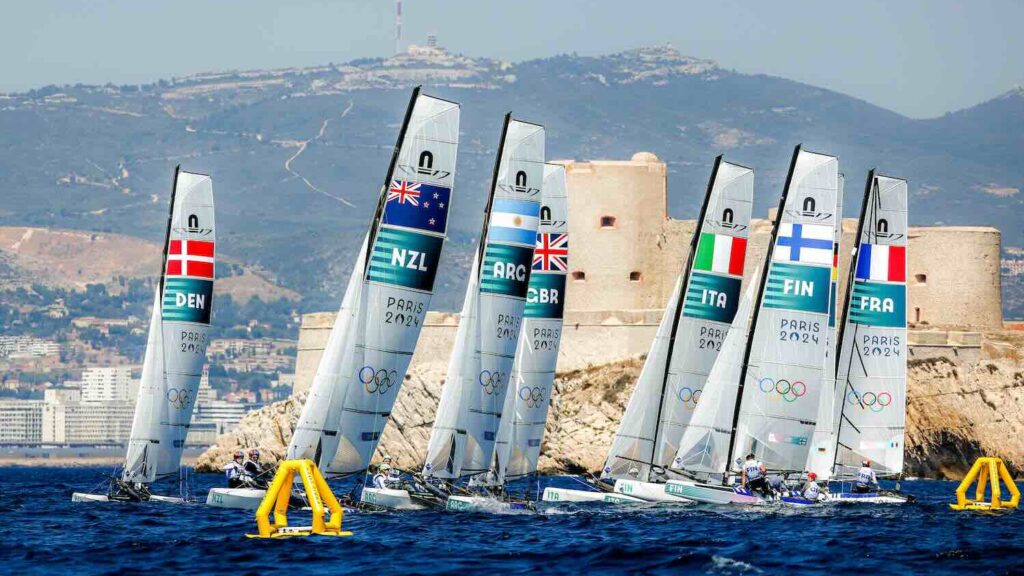
Despite major shifts in wind strength and direction, start lines and mark positions were accurate throughout the competition thanks to GiPSy’s precision positioning and real-time course adjustment technology.
“Race committees usually need chase boats, crews, anchors and a lot of time to set up a course. It’s expensive, polluting and logistically difficult. On top of that, anchoring is now forbidden in many areas in order to help protect the seabeds. Our buoys can move into position on command, hold their place precisely and adapt to wind or course changes in minutes.”
GiPSy is aimed at clubs and federations across the watersports segment such as sailing, rowing, wakeboarding and open-water swimming organisations.
The startup’s main early adopter was the French Sailing Federation, with the organisation’s feedback proving instrumental.
“By working closely with them, we were able to push the product forward and many of the technical specifications like having a product that can be used in over 30 knots of wind speed and strong currents came directly from that collaboration. They helped us test in real conditions, identify edge cases and refine both hardware and software to meet the demands of high-performance sailing environments,” adds Venturi.
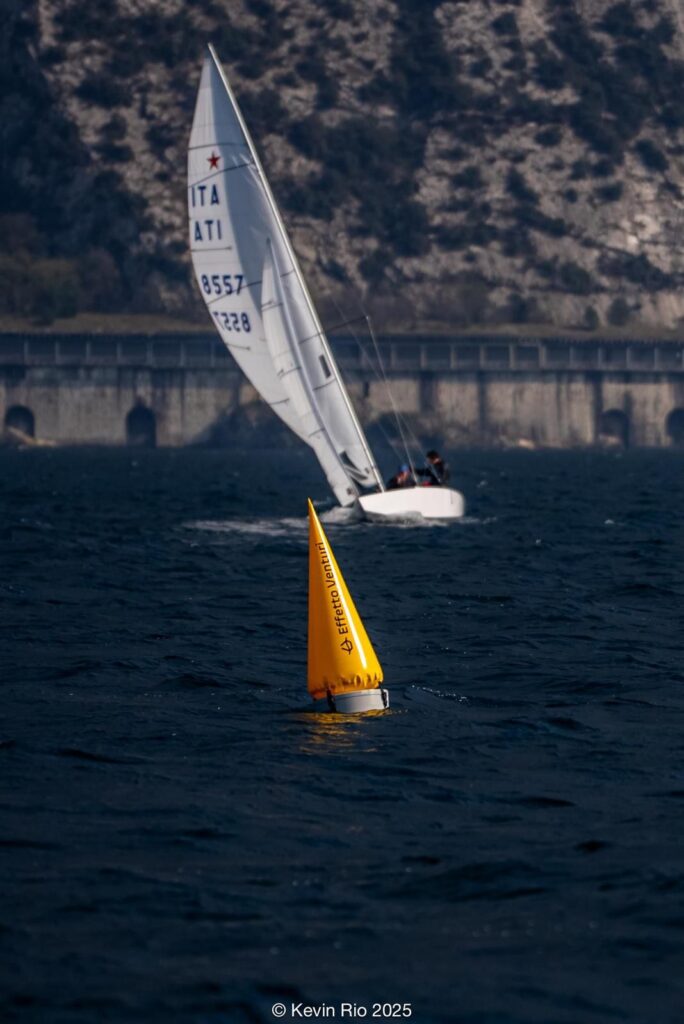
While initial applications are in the watersports space, the core principles behind the technology could be adaptable for use in harbours, offshore energy sites and even water treatment facilities.
The startup ran into supply chain challenges but this has resulted in a production silver lining: “One of the biggest challenges was the shortage of key electronic components at critical times. For a while, it slowed down production in moments of high demand. That pushed us to design and manufacture our own custom boards, giving us full control over supply and reliability. In the end, what was a challenge became an advantage and now we’re less dependent on global shortages and have a product that’s more robust and tailored to our needs.”
When asked about other innovators in the marine space, Venturi says: “One company we really admire is BlueRobotics, our thrusters suppliers. What we appreciate is that they started from a real, practical need: affordable, reliable thrusters for marine robotics that did not exist at the time. Their products are now robust, open and well-engineered, and they’ve built a strong community around them. It’s a great example of solving a clear problem with smart, scalable design.”
Over the next 12 to 18 months, Effeto Venturi is focused on three significant milestones. “First, we’re scaling up our rental fleet – it has already quadrupled since last year, but demand still exceeds supply. Second, we’re launching mass production of our new polyethylene buoys, both large and small formats. And third, we’re considering upgrading our tech stack by integrating new communication protocols like LoRa and implementing high-precision GPS through real-time kinematics (RTK).”

Competr
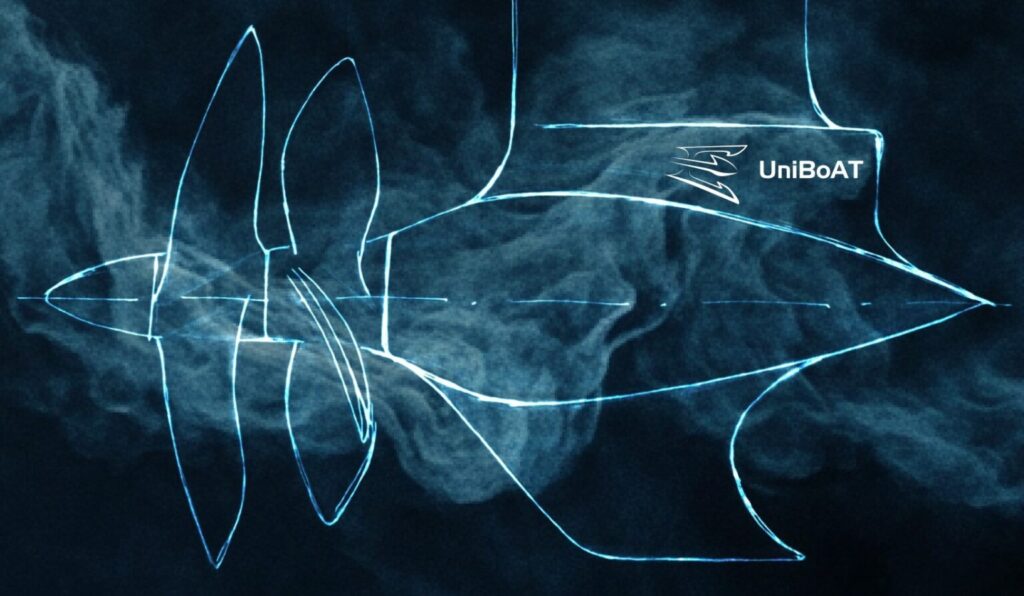
Developed by the UniBoAT research team at the University of Bologna’s Department of Industrial Engineering, Competr – an acronym for counter-rotating and tractor propellers electric outboard – is aiming to revolutionise electric propulsion.
Engineered to deliver high performance while remaining compact and accessible, Competr designs and develops an ultra-light electric outboard motor with counter-rotating tractor propellers.
Iacopo Roncuzzi, co-founder of Competr, says: “Traditional outboard engines powered by combustion are noisy, polluting and increasingly restricted in lakes and coastal areas. Existing electric solutions are often too heavy or underpowered to be practical. Our motor addresses both problems by providing a lightweight, efficient and sustainable alternative that maintains the performance expected by demanding boaters.
The 22kg electric outboard motor features patented dual counter-rotating tractor propellers, a carbon fibre frame and a modular plug-and-play battery – delivering, Roncuzzi says, the power and responsiveness of much heavier combustion engines, with none of the noise or emissions.
“The main challenge has been balancing the engineering of advanced features, such as counterrotating tractor propellers, with the need for industrial scalability. Moving from a university-proven prototype to a product that can be consistently manufactured at high quality and offered at a competitive price requires time, capital (a lot!) and close collaboration with specialised suppliers.”
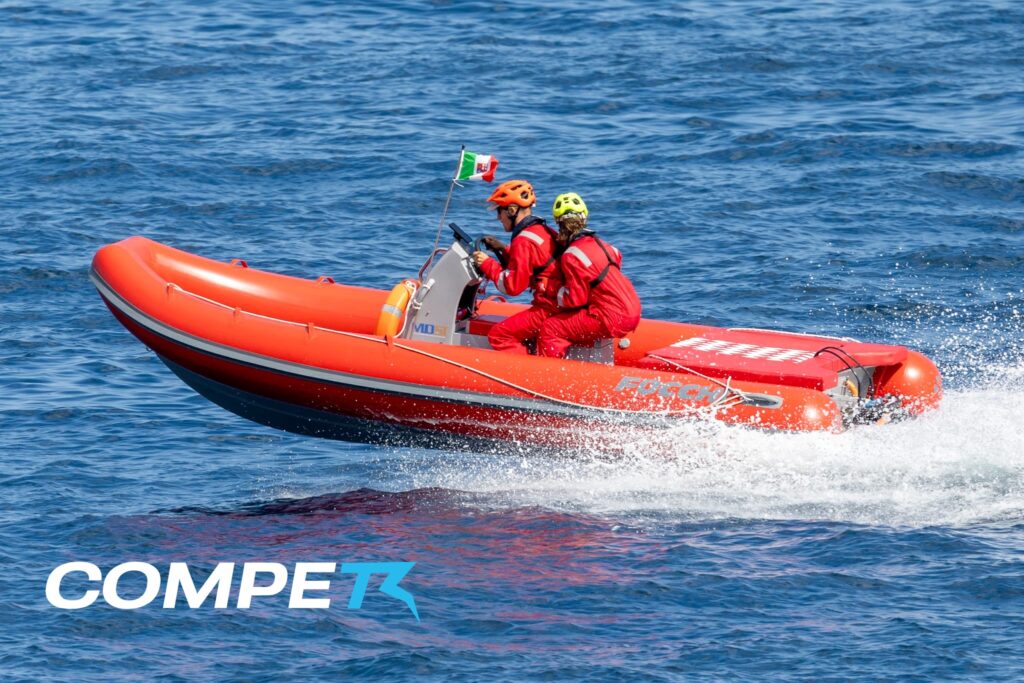
While the project was born within an academic setting, Competr’s direction has quickly evolved into a commercially focused startup with clear industrial ambitions.
The design has been conceived specifically for marine use, particularly for light boats, tenders and small craft where weight and efficiency are paramount.
“Some of the underlying technologies, such as lightweight carbon-fibre structures, advanced cooling and lubrication, and modular battery systems, have cross-industry potential and could be applied in automotive or aerospace sectors,” he adds.
The startup’s core targets are OEMs, boatbuilders and professional yards looking to integrate a premium electric propulsion solution into their product lines. Secondary markets include end users such as yacht owners, sports teams and rental services.
With regulatory pressure tightening on the use of polluting engines across inland and coastal zones, Competr, like many marine startups, is strategically positioning itself as a credible, high-performance electric alternative.
Roncuzzi says: “Feedback has been highly positive, especially regarding the lightness of the unit, ease of installation and manoeuvrability. During competitive trials, such as those at the Monaco Energy Boat Challenge, pilots highlighted the responsiveness of the counter-rotating propellers, and the extended range compared to conventional electrics. These inputs have guided refinements in the latest prototype.”

Competr’s participation in events such as the Monaco Energy Boat Challenge has also helped validate its design approach in real-world conditions, strengthening the team’s technical confidence and visibility within the marine innovation community.
Looking beyond Competr’s own development and reflecting on other companies driving progress in marine electrification, Roncuzzi says: “We admire Torqeedo for being among the first to open the market for electric outboards. While we are developing a lighter and more efficient solution, their ability to push electric propulsion into mainstream awareness has been instrumental in paving the way for companies like ours.”
Priorities over the course of the next 12 to 18 months are to finalise pre-series production, secure key OEM partnerships and deliver the first pilot units to selected yards and clubs. “We aim to complete the industrialisation process, strengthen our IP portfolio and validate the product through real-world use cases. Commercially, we target initial presales in 2025 and pilot deliveries in 2026.

SmartdrinX
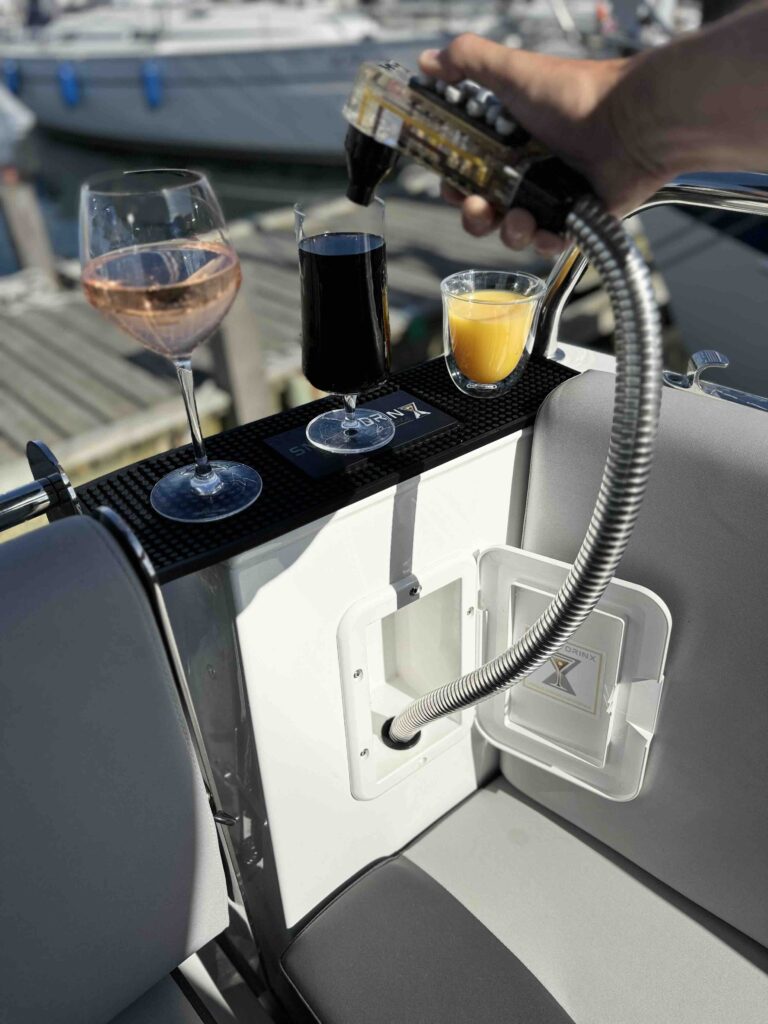
SmartdrinX is an innovative drinks system designed specifically for luxury yachts. “With the push of a button, your soft drink, wine, cocktail, long drink or draft beer is served chilled with style,” says Jacob Hansen, CEO & co-founder.
“On board, space is limited and storing bottles or mixing drinks can be messy and inconsistent. Our system solves this by dispensing drinks at the right temperature, in the right measure, with no fuss. It’s about making life easier for crew and ensuring owners and guests enjoy a consistently high-quality experience,” he explains.
“We primarily work with OEMs and yards who want to offer innovative hospitality features in new builds. But there’s also a strong market for refits and the charter industry, where suppliers and owners want to upgrade without major modifications.”
In terms of feedback, Hansen says crews love the simplicity and space saving, while owners and guests appreciate the quality and convenience.
“Early adopters have highlighted how it reduces waste, saves time and adds a “wow” factor to the onboard experience,” he adds.
“The marine industry values reliability and tradition, so introducing something new requires proof,” Hansen continues. “Our biggest challenge has been demonstrating that our systems are robust enough for life at sea. That’s meant rigorous testing, adapting designs for marine use and working closely with early adopters to build confidence.”
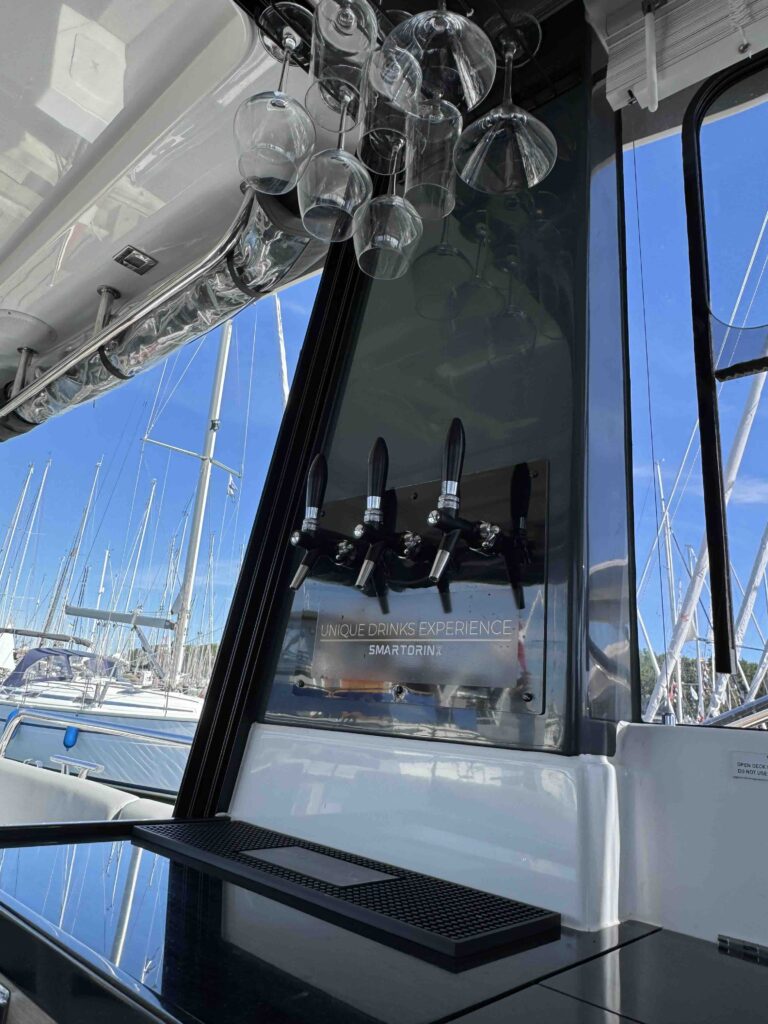
The foundation of the system comes from hospitality and catering but SmartdrinX has re-engineered it with compact design, low power usage and resistance to vibration.
Drawing inspiration from the wider marine community, Hansen says: “Dometic is a company we look up to. They’ve taken essential comforts like cooling and climate systems and adapted them perfectly for marine life. They’ve proven how to translate everyday needs into solutions that work at sea – a philosophy we share at SmartdrinX.”
Over the next 12 to 18 months, the team plans to expand installations to build a strong reference base, scale installations on private yachts as an aftermarket product, partner with leading shipyards and OEMs to integrate SmartdrinX systems in new builds, enter the charter industry and launch a SmartdrinX app to automate drinks configuration, personalised drinks and AI support for drinks recipes.
“We want to meet with builders, suppliers and owners, form new partnerships and, most importantly, listen to the market so we can refine our offering further,” Hansen concludes.

Marine Innovations Limited
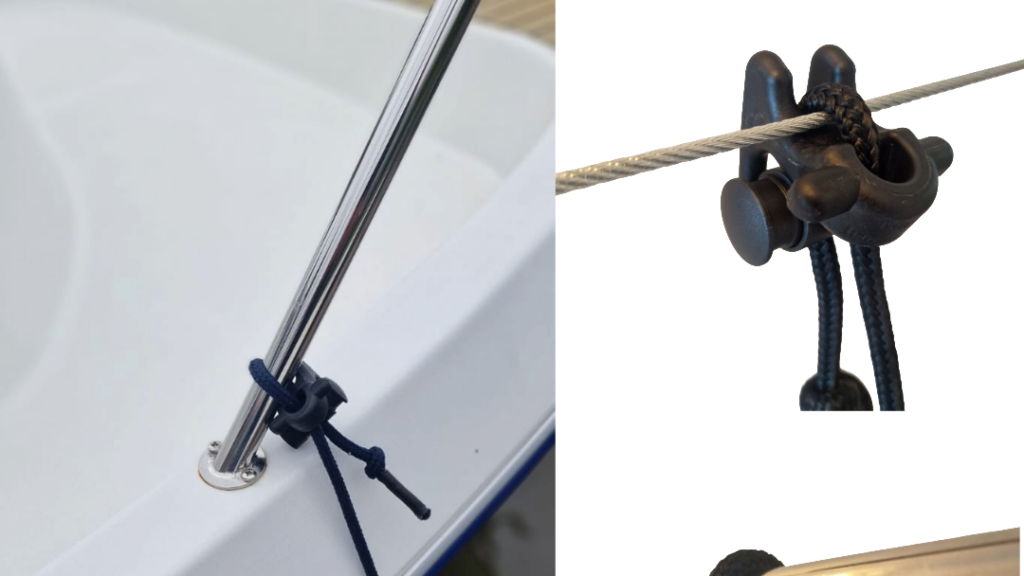
UK marine startup Marine Innovations Limited, design and manufacture maritime accessories that combine clever engineering with everyday practicality.
The brainchild of founders and avid boaters, Bradley & Rachel Davis, the range includes solutions such as the Adjustable Fender Mate, Fender Slider, Rope Looper and the Ultimate Boat Bar.
Rachel Davis explains: “We make original boating products that make life on the water easier, safer, and more enjoyable. Every product we sell is our own invention, developed from real boating experience to solve problems that existing marine products often overlook. We focus on designs that are simple, effective and affordable, so any boat owner can use them without complicated setup or maintenance. Our ideas stand out in a market where many products fail to perform or lack durability.”
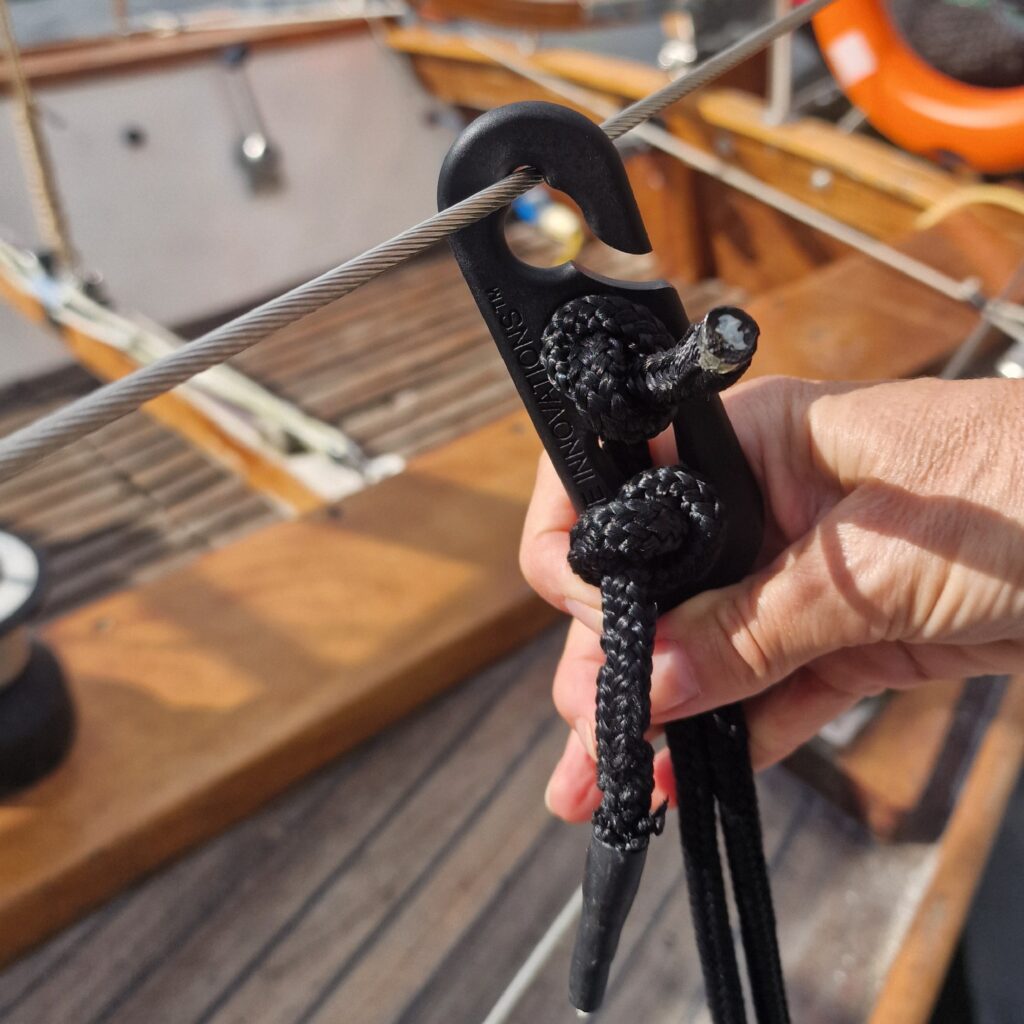
The products aim to solve real-life boating challenges for experienced sailors, novices and users with mobility or dexterity limitations.
Bradley Davis explains that the company has received outstanding feedback from users with dexterity challenges, “who say products like the Fender Mate, Rope Looper and Fender Slider allow them to handle ropes independently,” thus boosting confidence and enjoyment on the water.
“Professional skippers, collectively logging over one million nautical miles, have also praised our products as gamechangers for solo boating and efficiency onboard.”
The company is targeting marinas and chandleries, and online marine stores and distributors.
Like many marine startups, visibility has proved a challenge. “Our biggest challenge so far has been establishing ourselves in a niche industry while marketing products nobody had heard of all on a tight budget. Without outside investment, we have had to be resourceful, often wearing multiple hats across design, marketing, customer service, social media, packing and accounting,” Rachel adds.
“Building brand awareness from zero required exhibiting at boat shows, attending marina open weekends, cold calling, producing demo videos and encouraging customers to spread the word. Designing products that work for all types of boaters also required rigorous testing, refinement and re-testing.”
In the short to medium term, the duo plans to expand the Marine Innovations Limited product range and form strategic partnerships.
Bradley Davis adds: “We plan to collaborate with marine retailers, boat manufacturers and marina operators. We are passionate about investing more into research and development, customer-driven design and sustainable materials. We want to build a business known for its creativity, quality and integrity, not just its product line.”
The startup’s flagship product, the Adjustable Fender Mate, is designed to simplify fender management with quick attachment and adjustment. “At the heart of everything we create is a simple philosophy: boating accessories should be affordable, reliable and built to last,” adds Rachel Davis.
“We also focus on making our products from recycled materials like nylon, adding glass fibre to create additional strength and durability.
“We offer replaceable parts to help reduce environmental waste and have minimal packaging with all instructions created in video format.”
In recognising the wider wave of marine innovation, the founders say they admire CoastKey for their innovative approach to boat safety, combining smart technology with practical design to make boating safer and more enjoyable.
The post 5 exciting marine startups talk scaling up & what’s new for 2026 appeared first on Marine Industry News.