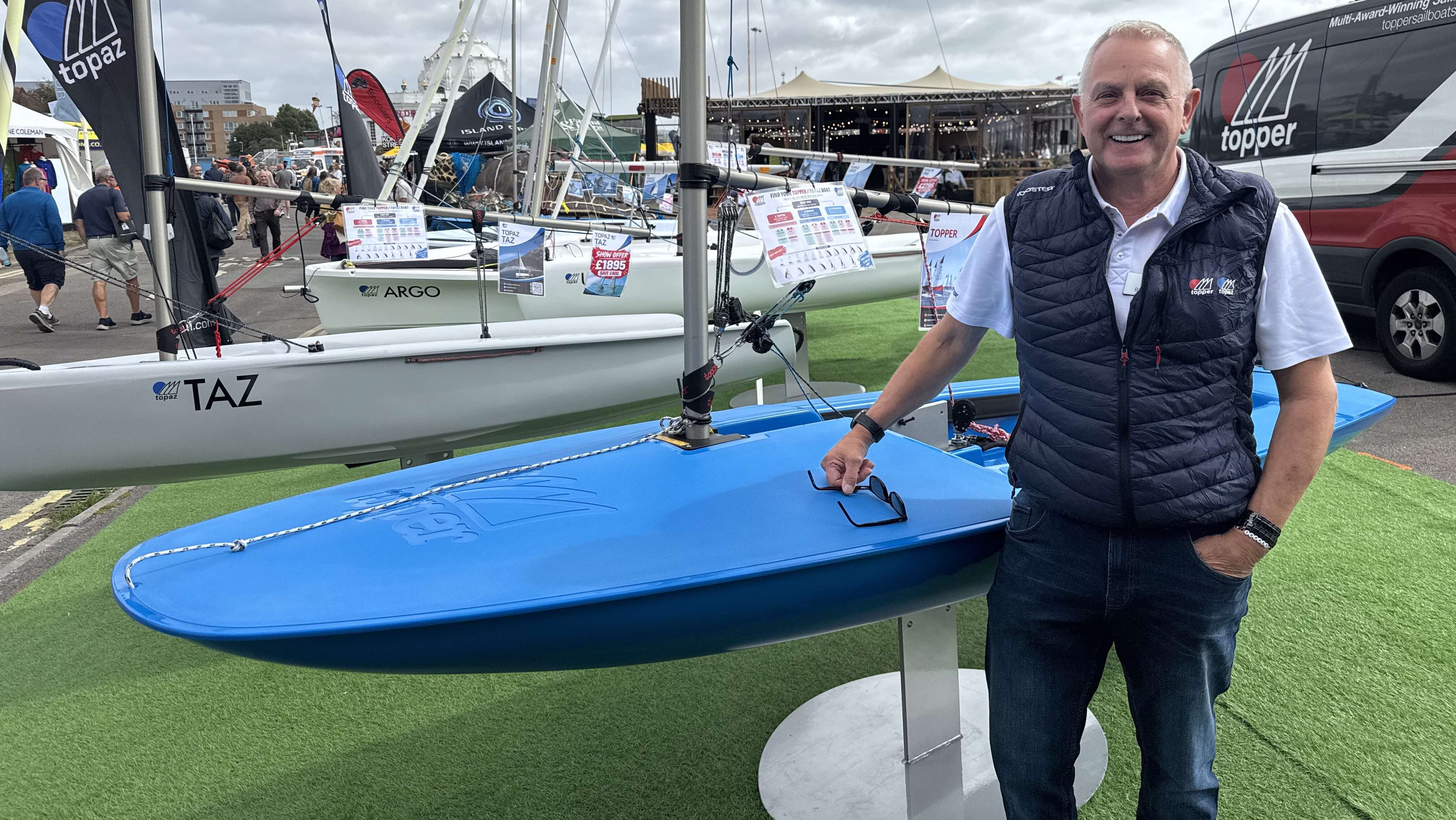
For more than 50 years, the Topper has been one of the boats through which young sailors have discovered the sport. But keeping an iconic dinghy relevant means more than continuing to build the same boat. Topper International has changed how the boat is manufactured, put greater emphasis on servicing its existing fleet and is now looking beyond boat sales to the bigger question of how to bring more people into sailing.
“Sailing is a fantastic sport and I don’t want it to die,” states Russ Dent, sales and racing manager for Topper International (the official UK manufacturer of the Topper and Topaz catamaran range), speaking at Southampton International Boat Show.
Topper has a broad presence across the UK sailing market, with its boats found at sailing clubs throughout the country – who didn’t learn to sail in one?
From GRP to a new generation of Topper
Production of the original fibreglass prototype began in 1969, followed by the official launch of the iconic mass-produced injection-moulded boat in 1976. Topper International was later formally structured under its current corporate ownership in 1983.
Now Toppers are manufactured using a split production process. The hull mouldings are produced by Perception Kayaks at a factory near Heathrow, which has the specialist roto-moulding equipment required. Topper then completes the boats in-house at its Ashford, Kent, facility, including manufacturing its smaller masts and fitting out the boats, says Dent.
Topper’s manufacturing history has passed through three distinct stages. The boat was originally produced in GRP, before moving to injection-moulded polypropylene in the 1970s. That process became central to Topper’s success, allowing the design to be produced at much greater volumes while retaining a lightweight, durable plastic construction.
That injection-moulding system remained in use for decades, producing the familiar red-decked Topper. The hull and deck were made as separate polypropylene mouldings and then joined to create the finished boat.
The next major change came in 2023, when Topper replaced injection-moulded polypropylene with roto-moulded polyethylene. The move followed damage to the ageing injection mould, with Topper saying replacement would have cost around £1.5m. The company also faced limitations around the small number of manufacturers capable of producing the large polypropylene mouldings, as well as rising production costs and minimum order requirements.
The new boat is produced as a single roto-moulded unit rather than using the previous separate injection-moulded hull and deck construction. Topper says the change was intended to safeguard the future of the design while retaining its established characteristics.
The new construction also removed seams from the hull, eliminating a potential source of leaks. According to Dent, the current boat is also slightly stiffer than its predecessor.
Keeping boats sailing for longer
Now servicing the boats plays a key part in the business model.
The Topper and Topaz brands have a strong presence in the schools market, where durability is a key consideration. Dent says schools can typically run the boats for five or six years despite heavy use, with replacement cycles generally around four to five years as boats become visibly worn rather than because they are no longer usable.
“We’ll go out to schools and sailing clubs and we’ll set up a service day … so their boats are kept going for the following season.
“There’s no other class really that actually does what we do looking after boats for customers.
“These sailors, they’re only, like, 10 to 14 years old, so they haven’t got the knowledge to keep everything going.”
The parents keeping the class alive
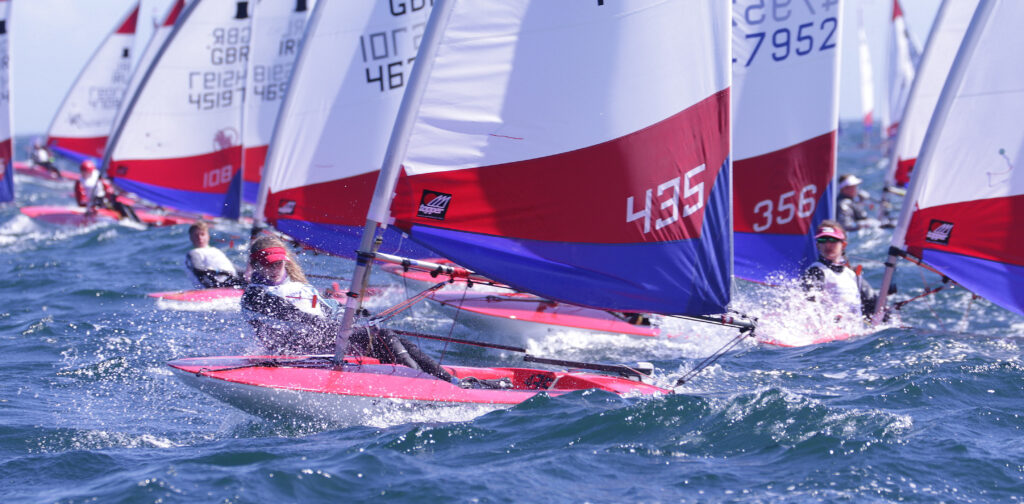
Dent says it is class events (and parents) who play such a key part in the enduring popularity of Toppers and Topazes. (There’s plenty of information on the company’s website about the events it organises and attends.)
“We do a nationals and a worlds,” he explains with 180 or so boats, and 300 people (competitors and parents), involved at any one time. He takes his van filled to the brim with anything he needs to repair onsite.
“It’s parents who like to come up [to the van]. They want their boats looked after properly, so they come to the van.”
But it’s not just about maintenance – Dent believes the parents are inspiring the next generation.
“The parents that are coming back into it now used to sail Toppers back in their childhood. But nobody’s here ’cause their parents have forced them to do it,” he says.
“Sailing kids are so well-grounded, because they have to look after themselves out on the water. Parents can see that it’s good for their kids. They’re not on their phones, they’re having a laugh out on the water, and on the beach as well.
“It’s just fantastic really.”
Dent notes that the class is growing. “We’re getting more and more people in,” he says.
‘We need more sailors’
However, for Topper, attending consumer boat shows like SIBS is also about bringing new people into sailing, rather than simply selling boats. Dent says shows such as Southampton provide an accessible starting point for people who may be interested in sailing but do not know where to begin, giving them somewhere to see the boats and find out more.
That objective has become more significant as the number of dinghy brands exhibiting at shows has declined. Dent says Topper was the only dinghy exhibitor at this year’s event, but believes there is value in maintaining a presence even in a smaller market.
“We need more sailors,” he says. “It’d be lovely to sell some boats, but we need people in sailing for them to buy boats.”
The post Topper on winning the fight to keep the dinghy dream alive appeared first on Marine Industry News.