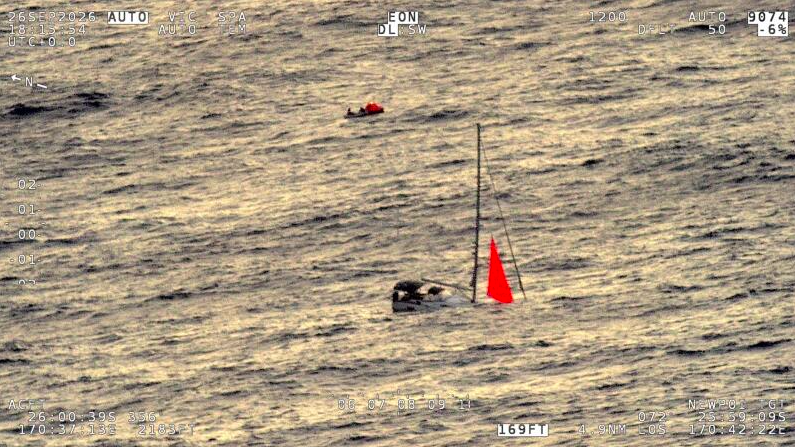
“We sat in the life raft … and watched the boat sink. A hundred metres away from us. That wasn’t a great moment,” says Jeremy Cooper. This came 18 hours after a sperm whale crashed into the family’s Beneteau Oceanis 51.1 which Cooper and his wife were onboard on the way to New Zealand.
“There was sort of a loud thud. The whole boat was pushed sideways,” says Australian Jemma Cooper, about the moment the sperm whale struck Tai Tam. The incident happened earlier this week in the South Pacific, 250 nautical miles north of Norfolk Island.
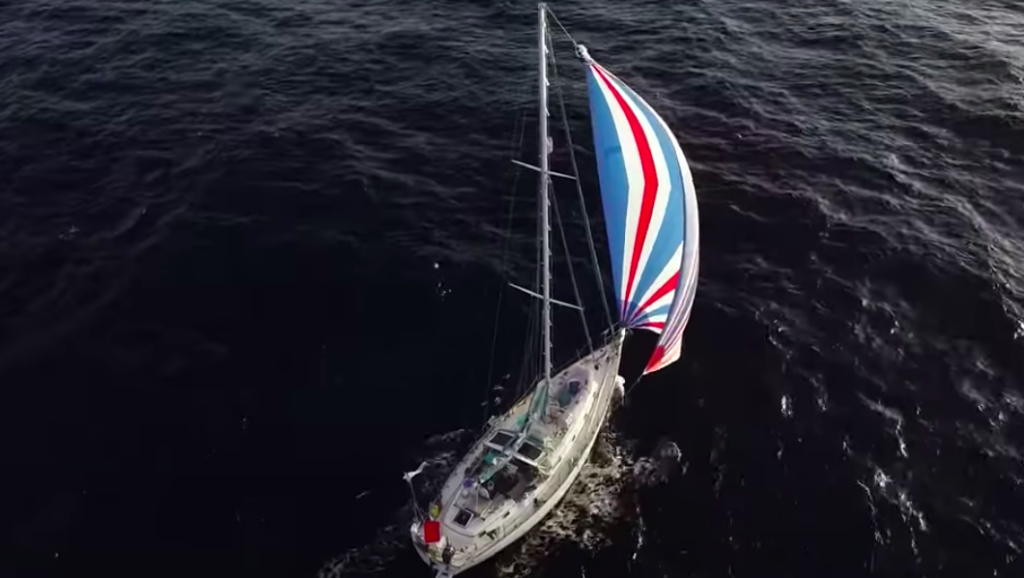
The Coopers had been utilising Tai Tam for around six years to cruise around the Pacific Ocean – this time they were joined by two others.
Jemma says she was thrown from the steering wheel in the force of the blow and the crew immediately spotted a pod of six whales next to the boat.
There were “one to two huge ones. They were as long as the boat,” she says. Adult male sperm whales measure between 50 and 60 feet, and are considered a vulnerable species. A recent study suggests that the large marine mammals change the way they produce vocalisations when boats are nearby, suggesting the vessel noise may be influencing how they communicate.
‘The boat was completely uncontrollable’
Her husband, Jeremy Cooper, was sleeping below deck. He woke up immediately.
“It was immediately evident it was very serious,” he told AFP. “All the steering gear was smashed on the starboard side, and there was a significant amount of water coming in.”
Seemingly the incident left several gashes in the hull, cracked the fibreglass structure, and he rudder was all but torn off.
“The boat was completely was completely uncontrollable by the rudders,” Cooper told 9News.
With the situation likely to be unrecoverable, and given the location, 500 nautical miles north of New Zealand, about the same south of Fiji, it was decided to call for help.
Crew abandons yacht, then watches it sink
The yacht’s emergency beacon was activated about 30 minutes after the impact – those onboard then spent the next few hours bailing, and trying to stem the water with expansion foam. They stayed aboard as long as possible before transferring to their yacht dinghy and life raft (in calm seas).
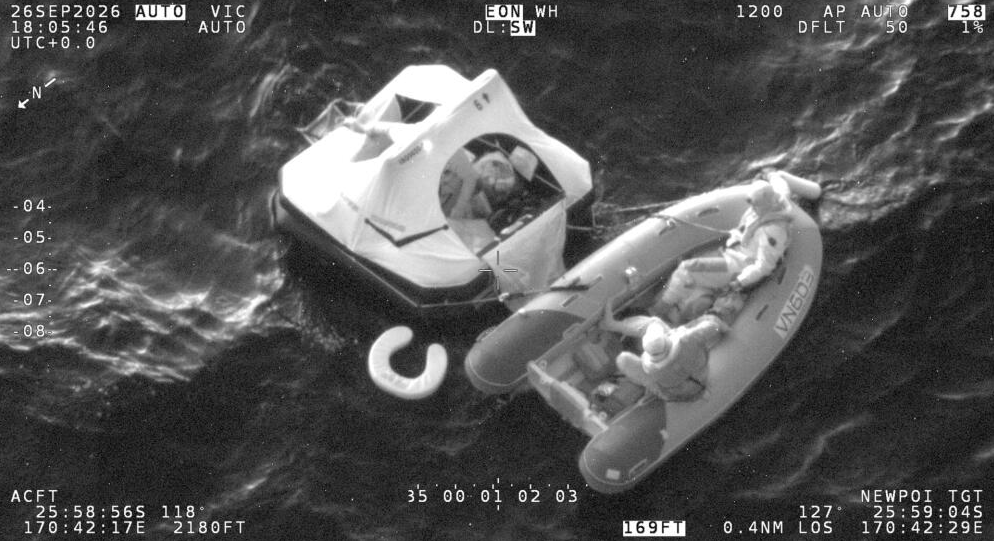
In the early hours of the next morning, they cut the tether to the yacht. The yacht sank soon afterwards.
Meanwhile, the Royal New Zealand Air Force has flown a P-8A Poseidon patrol plane to the area to establish radio communications and coordinate the rescue.
Container ship comes to the rescue
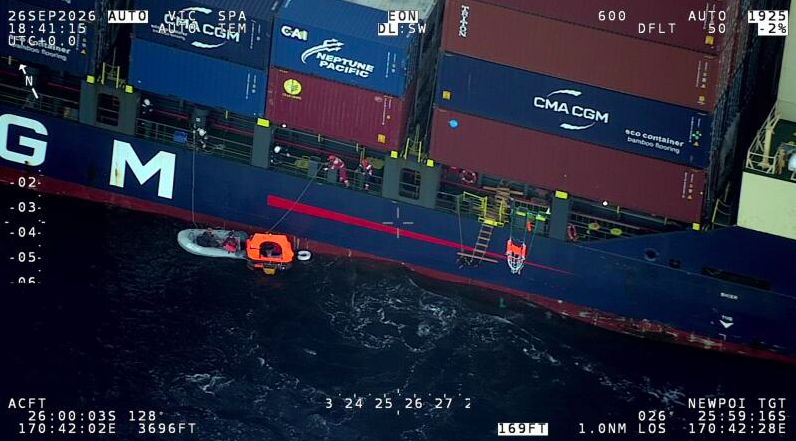
All in all, the incident lasted around 18 hours. The crew were picked up by 470-foot container ship, the MV Sofrana Surville at 06:00.
“We’ve got a life raft the size of a double bed, and a 143-metre container ship coming towards you,” he says.
“When that last crew member gets on board and you know that they’re safe, I just burst into tears,” says Jemma Cooper.
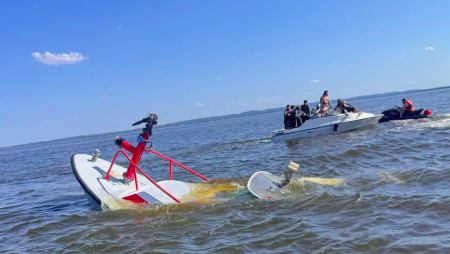
Orca interaction have been causing havoc to sailors off the coast of Galicia and along the Iberian Peninsula for round six years. Just recently, orca damaged the rudders of two sailing yachts within 24 hours, with both crews returning safely to port.
Crew praised for organisation
“The crew of the yacht did all the right things,” notes rescue coordination centre operations manager Mike Clulow. “It was unfortunate to have struck a whale in open water. They were well prepared and the early activation of their EPIRB was key to helping get them to safety. It is an excellent reminder that being prepared when going to sea can save your life.â€�
Clulow also praised the coordination between the agencies and vessels involved in the rescue.
“This was a well-coordinated and executed rescue, and I’d like to thank our partners at the New Zealand Defence Force for their assistance, along with the assistance of JRCC Australia and MRCC Noumea who provided support. Our thanks also extend to crew of the MV Sofrana Surville and a private sailing vessel who effected the rescue.”
“We were unlucky to hit, to be hit by the whale, but then we were really lucky with the level of the response, and the weather,” concludes Jeremy Cooper. “I think I would definitely get back out there.”
The post ‘That wasn’t a great moment’: sailors watch as Beneteau Oceanis 51.1 sinks after whale strike appeared first on Marine Industry News.