
“The crazy covid bubble, where everything was selling easily – sometimes plastic that was floating was selling very easily – is over,” says Steven Guédeu, deputy CEO of Fountaine Pajot Group. “Now it’s back to reality.”
With the market returned to a new normal, Guédeu says the France-based group’s been investing in new models and manufacturing capacity with a long-term approach built around continued product development, rather than short-term returns.
“We are dedicating our cash to invest and increase the speed of new models. This is very important to pass through this particular moment [when] the demand for new boats is not so huge,” he notes.
It’s been a three-year strategic plan.
“We decided to invest in new models because … our clients, they love the innovation and they love the new product.”
This investment resulted in the group presenting four new models at Cannes Yachting Festival (CYF) in 2025 (two Dufour, two Fountaine Pajot), and in 2026 three new Fountaine Pajot and one new Dufour.
“Innovation, new models: this is [what] our client likes to have.”
The comment reflects the sentiment of Yann Masselot, chief sales officer at Groupe Beneteau, who told MIN the same. “In the first semester of 2026, 30 per cent of our sales came from the new models,” Masselot said. “It’s the only way to go. The market now is like that. If you don’t bring new models, then your life is becoming far more difficult.”

Fountaine Pajot expands its larger catamaran range
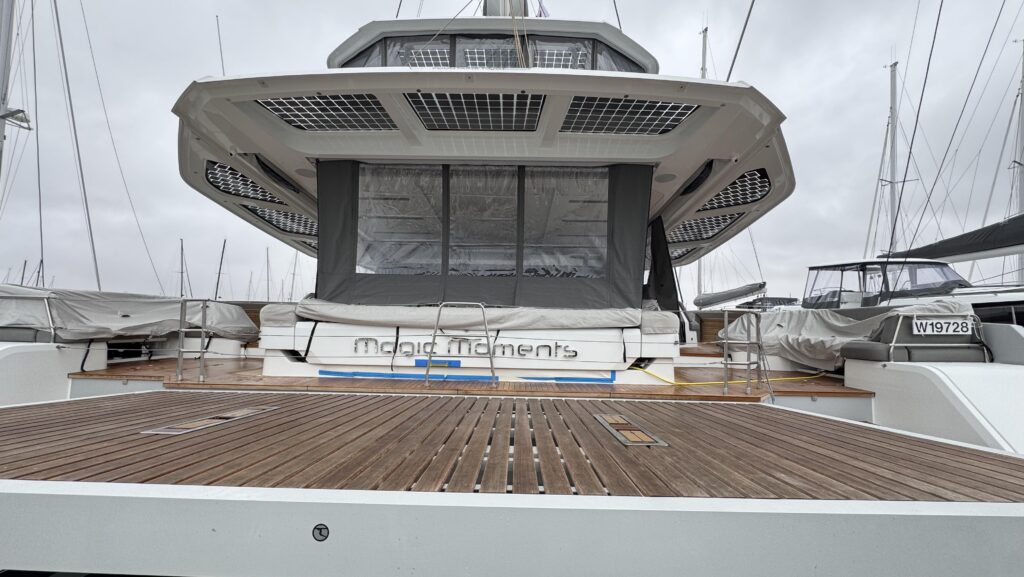
Alongside the model development, the group has introduced a clearer brand identity for its larger catamarans, under its Fountaine Pajot Yacht range. Its FPY70S made its world premiere at Cannes this year – the second hull is due in the water shortly.
Guédeu says the range’s development programme reflects customers’ priorities, particularly comfort and adventure. It offers both sail and power versions, reflecting demand for larger catamarans that prioritise space and comfort. The company says that some owners charter their boats to help cover running costs, while power catamarans are also benefiting from a shift among some buyers away from traditional large motor yachts.
Work on the new flagship FPY120 is also under way, with some construction outsourced to accommodate the scale of the project. The hull is being built in Lorient before returning to La Rochelle in February 2027 for assembly, with the first launch expected in early 2028 (generally the catamarans are built at the La Rochelle facility with direct water access). The first boat has been sold, with discussions under way for a second.
A long-term approach rooted in family ownership
The company, enjoying its 50th anniversary this year, employs 1200 workers, plus 400 additional temporary workers. But it can take quick decisions.
Guédeu cites the Dufour 39 as an example of innovation and rapid product development. That went from a ‘decision-to-proceed’ to being presented at CYF in just 12 months.
“We have a product plan, and sometimes we change,” grins Guédeu.
But long-term investment always underpins the innovation. Like the investment made in 2018, when Fountaine Pajot acquired Dufour. Guédeu says Claire Fountaine, president of the board, welcomed Dufour employees into the group with a clear message: “You are not here for two years, five years, ten years. This is forever.”
Factory tours a part of the sales strategy
One factor aligned with the future is – perhaps surprisingly – factory visits. They’ve now become part of the group’s sales strategy. Fountaine Pajot has organised around 150 tours for clients and prospective customers, as Guédeu says seeing the manufacturing process helps convert interest into sales.
“We are industrial, but some things are made by hand. There is a lot of know-how, so we are somewhere between highly industrial and very manual.” He notes that satisfaction surveys show 64 per cent of customers rate the factory tour among their best experiences in the purchase journey, alongside sailing.
Investment over the last few years
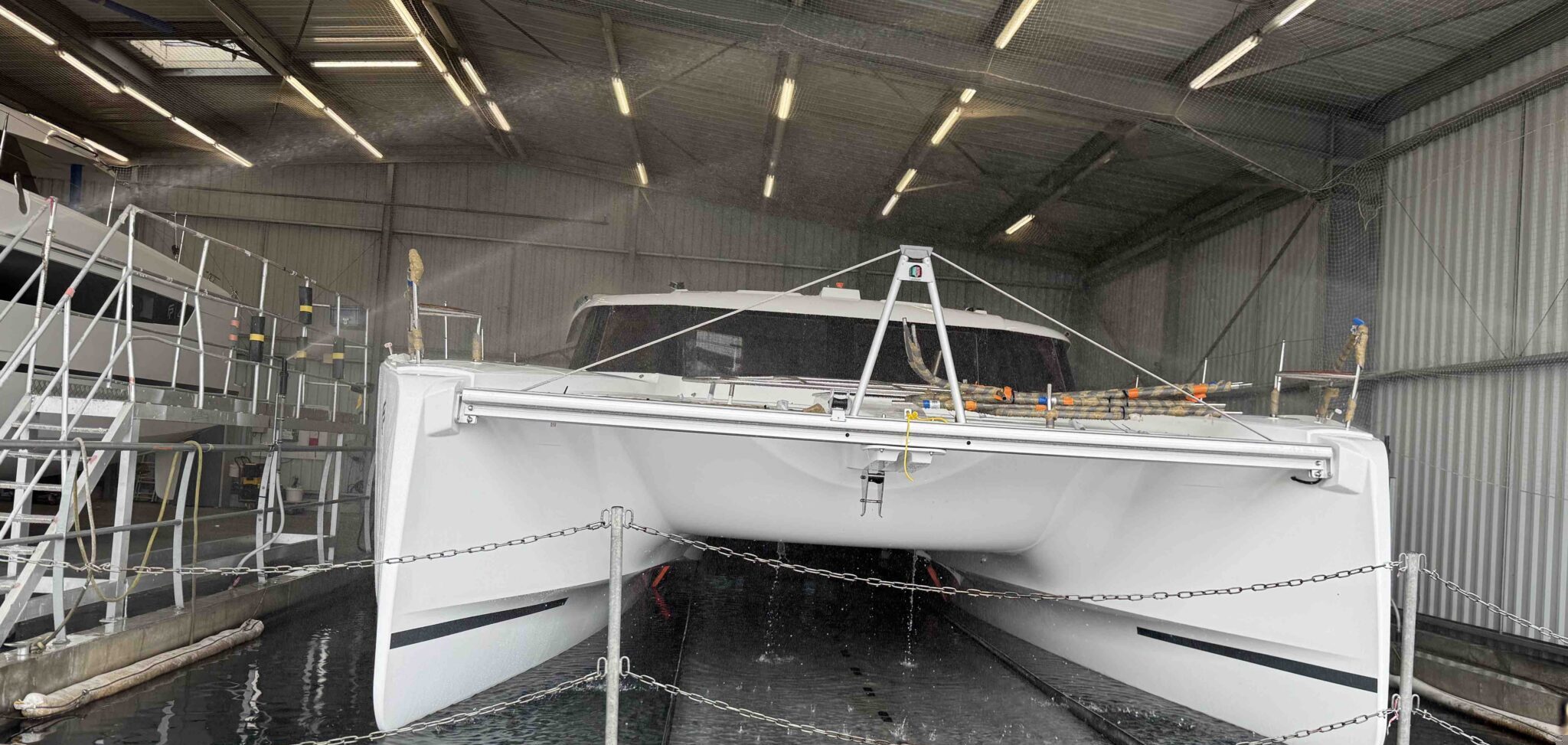
Over the past few years the French builder has been navigating the softening global market by aggressively reinvesting its capital. It’s shifted its strategic focus toward product range renewal, industrial automation and eco transformation. In 2026, it entered a joint venture with the Bénéteau Group to establish E-Lektra Marine to standardises electric propulsion and smart energy management across seven major brands. It also poured €16.5 million into funding technical upgrades and new yacht designs, with a separate €25 million focused on modernising production (building a flexible industrial line capable of concurrently assembling larger flagship models like the Dufour 54 monohull and the FP55 catamaran).
Within its 50th anniversary investment plan, it has targeted industrial flexibility, range transformation and the expansion of its internal training school. And in 2025, its corporate alliances included a joint venture with Veya Yachts (in collaboration with the Couach shipyard) to co-develop international power catamarans. Prior to that (2024) it took a major stake in the Australian distributor The Yacht Sales Co. to consolidate Asia-Pacific retail arms. This built on the corporate asset purchase of Malvaux Industries (specifically targeting its factory facilities in La Chevrolière, France) to secure localised supply chain property and buildings.
The post “It’s back to reality” as investment continues at Fountaine Pajot appeared first on Marine Industry News.