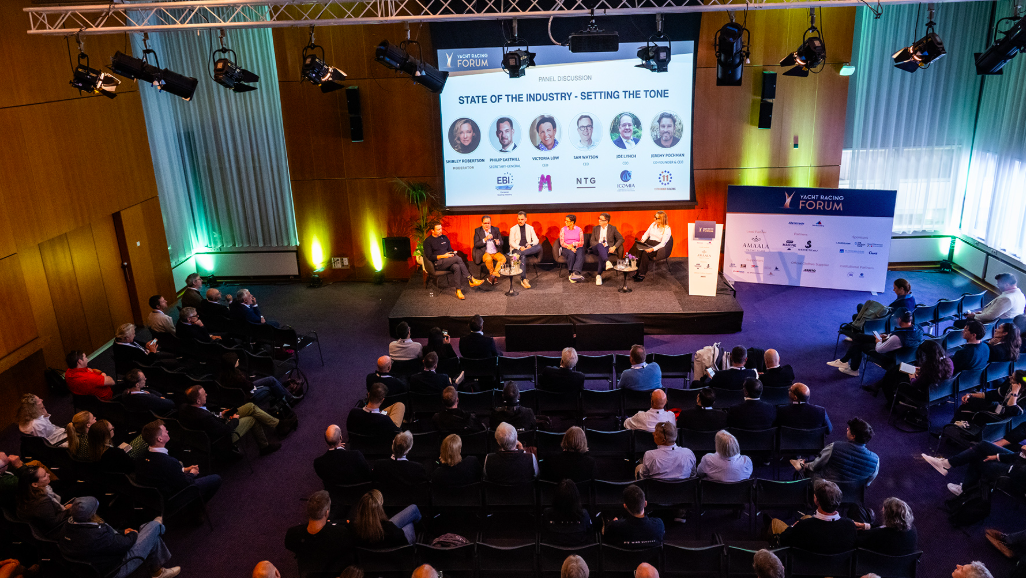
“It’s not rosy at the moment. It’s really tough.” That’s the words of Joe Lynch, CEO ICOMIA, speaking at the Yacht Racing Forum in Amsterdam last week. As part of a panel to discuss whether yacht racing is currently healthy as an industry, Lynch was at pains to point out that his opinion is specific to the wider boating industry – including PWCs, sailing or motor yachts and more.
“The headwinds we’re facing have been blowing for about four years now,” Lynch says, likening the current state of the industry to a hangover from the covid-party, with “five successive years of shrinkage in terms of production of new boats around the world.
“Within that picture, there are a couple of nuances. More affordable and accessible boating products are holding their own – that’s PWCs.
“The last year, the overall industry’s down between five and ten per cent. Sailing is having it much harder than anyone else. In the US the market was down about 15 per cent for new boat builds and sales, in the last twelve months. It’s really tough.”
With that said, Lynch points out that, at the moment: “The bigger the boat, the better the market.”
Superyachts and marina development signal strong potential
This is in the context of the superyacht industry growing tremendously quickly with refit businesses planning ahead for ten-year upgrades on the slew of vessels being launched.
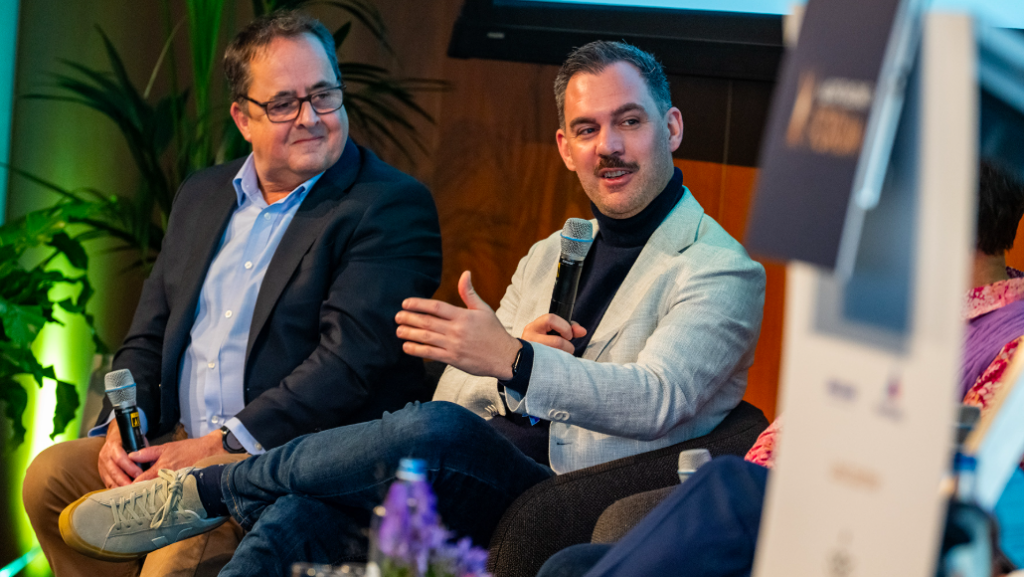
Lynch also notes that the marina industry is going from strength to strength with huge spikes in acquisitions and investments. “There aren’t enough marina berths for the boats that are being built, and the marina or property developers are now seeing marinas developing a really great premium compared to non-waterfront properties,” Lynch says.
ICOMIA’s excited to see the appetite and the pace of investment in new marina facilities. “It’s often very hard and very expensive to build a marina from scratch. But if we look at locations across Southeast Asia, across Korea, across Japan, there’s a lot of repurposing of areas.
“Harbours that were built for fishing fleets (that have now moved offshore) or for passenger fleets are becoming repurposed as hubs of a community to drive tourism, hospitality, and participation on the water.”
Icomia is hosting its World Marinas Conference 2027 in Shanghai, China, from 30 March to 2 April 2027 and has recently unveiled the full conference programme.
He believes if a marina is designed and built well, and integrated to the community, it opens up more opportunities for more people to go boating.
“And that’s in parts of the world where there isn’t the legacy and the culture of boating for fun . . . The opportunities they present is something that ICOMIA is studying very hard and encouraging our members around the world to build new leisure facilities which will encourage yacht racing and charter businesses and holidays, and just days sitting in a marina watching the boats come and go … a great way into inspiring the next generation of boating.”
Premium secondhand boat sales
Boats sold at the premium end of the market five or six years ago with – what Lynch describes as “all the bells and all the whistles” on are now being sold on the secondhand market through brokerage.
“The volume of boats being sold is really high, but they’re used boats. And you can understand why, because a consumer buying a boat is thinking: ‘I can buy brand new or I can buy five-years old with maybe only 60 hours of use over those five-years,’ which is staggering.”
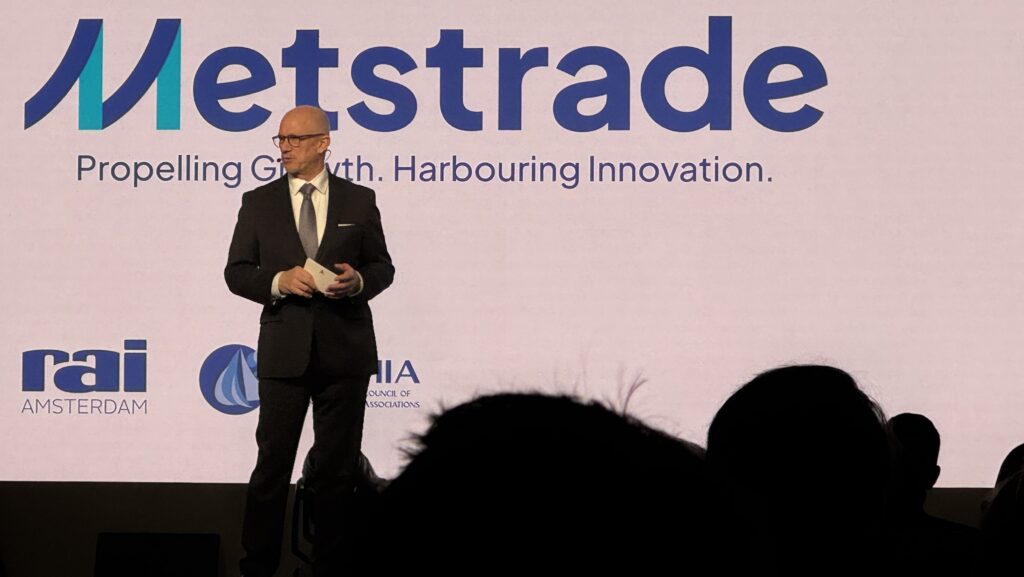
During Metstrade’s opening presentation, Bruno Thivoyon (Groupe Beneteau’s CEO) said his main competitors are not other brands, it’s boats the company sold five or ten years ago. Similar to the ones the company produces today, the older ones are “much cheaper because they were sold before the inflation.”
Lynch notes further current challenges such as the cost of fuel and borrowing increasing worldwide – all of which is suppressing demand for new product.
Future participation remains key challenge
But then there’s the future challenge – the participation of the next generation.
“The biggest market in the world is the US,” says Lynch. “In the last ten years, the demographic shift in terms of age of boaters has increased by ten years. So if you roll that forward twenty, thirty years, there’s not enough [people].”
Lynch believes that the industry needs to get eyeballs onto hyper brands like America’s Cup sailing and then eyeballs into Optimists or onto the water in whatever vessel – because if it doens’t, then the hangover will continue.
The post Boating industry’s five-year “hangover” from covid-party appeared first on Marine Industry News.