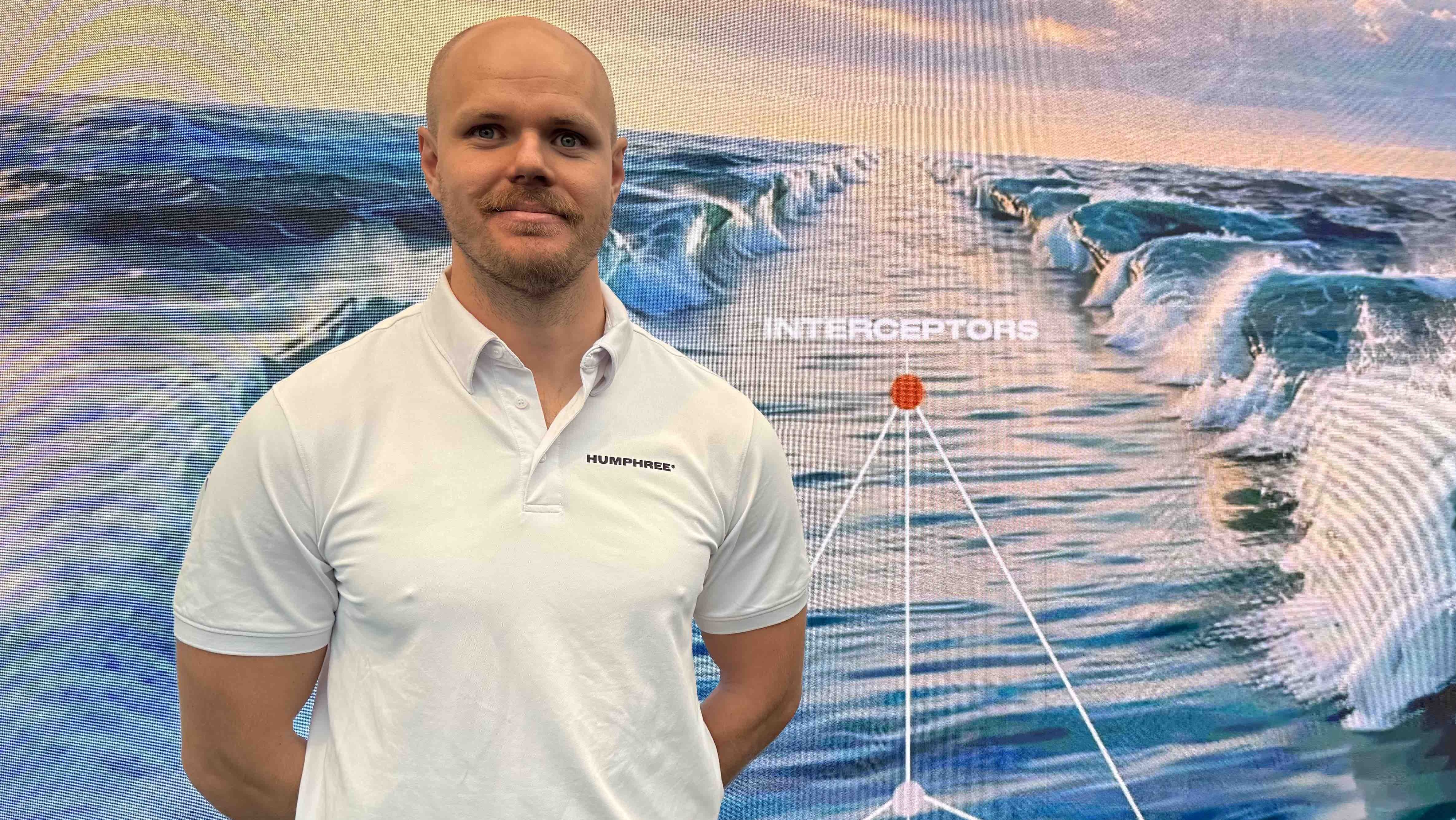
MIN sits down with Joakim Larsson, project manager for Humphree’s gyro launch, at Metstrade 2026.
“Many brands are building gyros these days. But the unique selling point with our gyro is the integration part,” says Larsson.
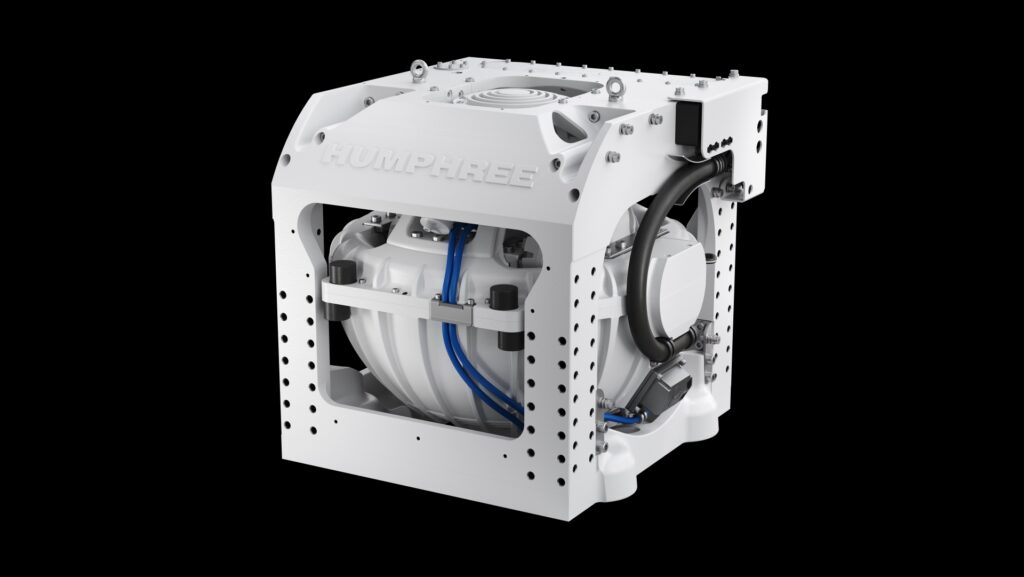
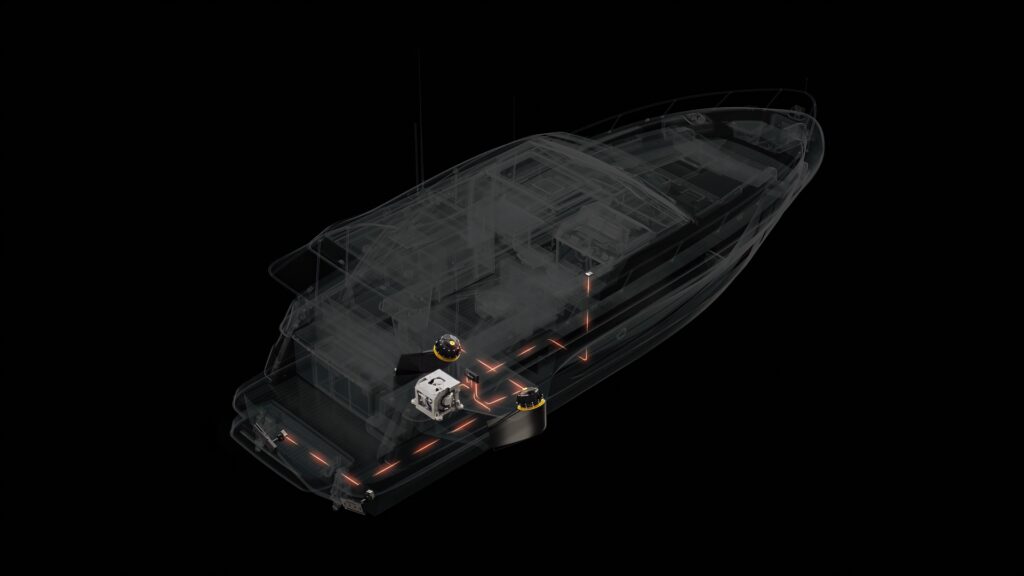
Earlier this year, at Cannes Yachting Festival, Humphree expanded its stabilisation portfolio with the launch of the HIG5 and a new integrated gyro. The system enables the gyro to communicate with the company’s existing interceptors and fins, bringing all three components together for additional stabilisation.
“The real benefit is that we wanted a gyro system which we know is very good in certain sea conditions. At low speed, at zero speed, a gyro is very efficient. We wanted to combine that with our other products… so we have a three-component system which is good at everything from zero speed up to high speed… ready for all sea conditions and all speed ranges,” Larsson explains.
The innovation lies not only in the new hardware, but in the overarching system approach. For the first time, a gyro, interceptors and fins are combined in one single, fully synchronised platform. All components are controlled by a central control unit that continuously analyses the boat’s motions.
The result is what the company describes as a future industry standard, where roll, pitch and yaw are managed within a unified system, allowing stabilisation technologies to work as one coordinated solution.
Larsson says the company’s motto has always been more days at sea, and HIG5 works to that.
“Even if it’s bad weather out, we can still go and have an enjoyable time – and now when we have the additional gyro in our lineup – we actually can do even more days at sea. It will fulfil some conditions that maybe we couldn’t reach with just the interceptors and fins.”
Feedback led to gyro development
Larsson explains that the framework around the gyro came from feedback on other companies’ products.
“We have talked to customers that have had our fins and our interceptors for many, many years” but their complaints about other gyros were that they could “sometimes be quite tricky to install”. Customers were also looking for something “that’s quite easy and low maintenance”.
He says Humphree’s gyro – which can also be purchased separately and was three years in development – is very low maintenance and easy to install.
“We can adapt to how the hull looks in the boat.
“If they want to place it directly on a plate, we can do that. If they want to lower it between stringers, we can do that.
“It’s very flexible.”
Larsson believes that Humphree’s combined system has come at the right time for the market.
“Many people are talking more and more about stabilisation,” he notes. “If you buy a very big yacht, you want it to be stable.”
The company is targeting OEMs, although the technology can also be retrofitted to existing boats. Owners with Humphree interceptors already installed can add a gyro to provide additional stabilisation. Larsson says initial interest has been really positive, with OEMs already installing it.
Challenge of adding a gyro to the lineup
The project hasn’t been without challenges.
“We needed to tweak our software model, how it works, how it communicates with our other systems.
“We have gathered a lot of sea data when we are out in different conditions and even though we already had a lot to work with, we needed to test in new conditions, in new hulls, and in new installations.
“So that, of course, was very tricky.”
But the effort’s been worth the result; Larsson says those buying the gyro, or the combined system, are “actually bringing value on the boat.
“We are very proud of the product that we have developed. We have managed to get a product to the market that’s unique, a product that fills a gap in what’s out there at the moment.”
The reasoning behind the name Humphree
Larsson says the name Humphree is actually a very good bad dad joke.
The company was conceived in Gothenburg, which he says “is quite known to have very bad jokes in Sweden. Most dad jokes are from Gothenburg.”
Like all dad jokes, it loses something in the explanation; however… when a boat accelerates, there’s a “hump before it goes straight” Larsson says. “Humphree means it would remove that hump completely.”
How Humphree’s gyro delivers up to 95 per cent roll reduction
As the gyro spins at many thousand revolutions per minute, a stabilising force is generated that counteracts surrounding wave motion. Overall, the system operates proactively, counteracting movements before they have time to build up. According to Humphree, the integrated system can reduce roll by up to 95 per cent, depending on boat type and operating conditions. The gyro is continuously managed by a dedicated control unit that adjusts the system in real time, making it a central part of the overall stabilisation logic.
“The marine industry has traditionally viewed stabilisation technologies as separate components that are selected and managed independently,” says Björn Säljö, CEO.
“Our approach is different. By integrating gyros, fins and interceptors into a single coordinated system, we can help boat builders and owners optimise stabilisation for their specific vessel, application, and operating profile. It’s not about one technology replacing another; it’s about making them work together as one system.”
All Humphree systems support remote access, which means the company can remotely diagnose issues, conduct sea trials and configure systems.
The post Humphree targets OEMs with integrated three-component stabilisation system appeared first on Marine Industry News.