While Egypt is blessed with beaches, diving and heritage offerings, it has suffered from geopolitical turbulence over the past decade, and, like many Gulf Cooperation Council (GCC) countries, is now investing heavily in modern infrastructure, residential and tourism offerings.
The country boasts a strategic north African location, an eastern European time zone and three boating regions: the Mediterranean, Red Sea and River Nile. In addition, waterfront real estate developments are rapidly expanding to capture international investment opportunities and tourism remains steady despite the recent conflict in Iran.
Property surge sparks shift to private boaters
Domestic tourism for the affluent has traditionally been split between autumn and spring on the Red Sea east coast (Sokhna and Hurghada) and summer on the Mediterranean north coast (Sahel).
Despite a significant commercial connection with the sea, from the ports of Said, Suez, Alexandria, Sokhna and Safaga, recreational yachting has not been a widely accepted pastime, with cultural preference for tourist boat charters – particularly for group diving – over self-drive ownership.
General manager for Marassi Marina Yacht Club, Mohamed Elnewishy, says: “As a nascent market, private boat ownership on the north coast is mostly smaller cruisers ranging from 20 to 40ft, with commercial operators offering day boats in the 20 to 40ft range for a family day out, and larger groups and corporate events catered for by catamarans and yachts up to 100ft.”
The property boom on the north coast is also attracting a new client base. Elnewishy adds: “This year, dealers have reported strong sales and enquiry activity during the summer season on the north coast, especially among first-time private boat buyers in the 20 to 35ft category.”
Superyachts present the ultimate growth frontier
The Red Sea profile, as a more established market, has larger day and diving boats, and a significant volume of liveaboard dive boats. Yet here the vessel split also leans heavily towards smaller recreational boats and commercial tourism vessels, while private yacht ownership remains a smaller
but growing segment.
Egyptian maritime specialist, Yasin Arafa, is vocal about the opportunity Egypt’s marine market offers: “Egypt’s leisure marine market is often discussed through the lens of domestic ownership, but the more significant near-term opportunity lies in the international superyacht segment. Egypt has coastline, history, and marine biodiversity that rivals any charter destination in the Mediterranean or Indian Ocean. »
“The gap between Egypt’s $15m annual charter revenue and the UAE’s $235m is not a gap in demand; it is a gap in quality infrastructure and operational frameworks such as permit accessibility, regulation transparency and safety regulation. If we close that gap, that converts natural assets into bookable charter products and Egypt becomes a serious player in global superyacht tourism.”
Marina developments in Egypt
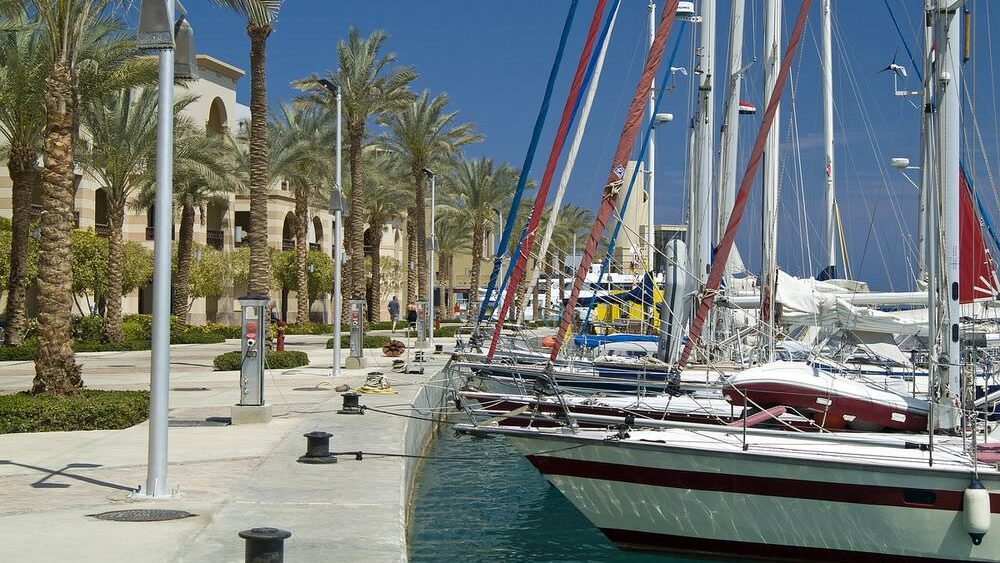
Leisure yacht marinas in Egypt are relatively new, originating in Cairo with Maadi Yacht Club and Cairo Yacht Club marinas catering for small cruisers on the Nile. Purpose-built marinas at Hurghada, El Gouna and Sokhna followed, with Port Ghalib in Marsa Alam, Marassi North Coast and Ismailia establishing an increase in private ownership and options for larger yacht berthing.
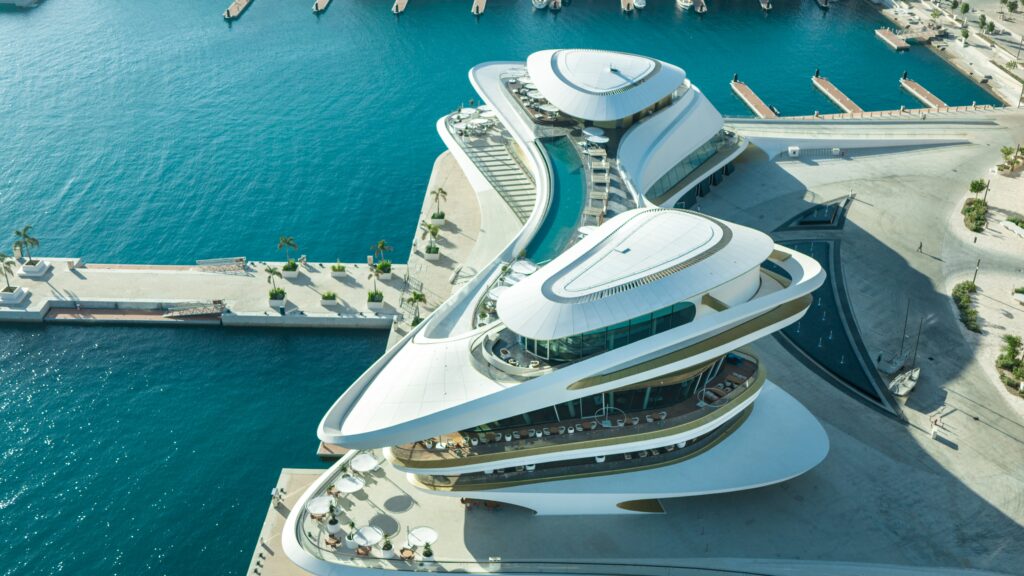
Basins in El Galala (Sokhna) and Taba Heights (Sinai) are also earmarked for marina redevelopment, further normalising boat ownership and expanding the range of boats beyond tourism and commercial dive/fishing style vessels. Scheduled projects for Ras al Hekma (Mediterranean coast) and Marassi Red Sea will expand the opportunity for cruising and berthing, especially sitting under established developers renowned for creating facility standards expected by international visitors.
A strategic crossroads for development
In line with other administrative changes opening up Egypt for tourism and commerce, the government’s Maritime Transport and Logistics Sector has initiated a unified electronic platform to simplify paperwork under the unified ‘Sail to Egypt’ slogan (reducing the time required to issue approvals and licences for visiting yachts).
Combined with a policy change to allow foreign-flagged, commercially registered yachts to be legally permitted to cruise freely for leisure, there are signs the authorities are responding to the calls from the local yachting industry.
The Suez Canal sees 60+ superyachts per year in transit, a number that was growing at 64 per cent in H1 2023 before Houthi disruption for yachts leaving the Red Sea to the Indian Ocean.
Leveraging its position, the Suez Canal Authority (SCA) has invested in inbound superyacht movement by building a dedicated yacht marina at Ismailia. It anticipates superyacht traffic returning and growing.
At the same time, SCA led a joint initiative to yachts transiting the Suez Canal to remain within Egyptian waters for tourism. Yachts under 300GT can claim discounts up to 50 per cent on SCA fees and berthing at designated marinas.
Customers driving international tastes
With traditional shipyards lining the waterfront of Suez, Safaga and Alexandria, Egypt builds hundreds of commercial and fishing vessels annually. However, aside from a few outliers such as De Birs yachts, quality leisure yacht builders are the exception with many vessels following traditional building methodologies that eschews the safety parameters and classification standards for the modern yacht market.
Refit and repair continues to be large business from neighbouring countries including Saudi Arabia, indicating the demand is there. That quality gap represents a significant industrial opportunity that aligns with Vision 2030-style ambitions for the country.
There is a rising interest in international brands for boats, engines and fittings. Thus, dealers and service agents are increasingly under pressure due to supply chain challenges for imported parts and extraneous costs created by currency volatility and import tariffs.
Consumer quality perception is also changing. Maintenance, service and customer care are expected at international standards. Dealers are therefore responding with more local partnerships, consolidated service centres and selective stocking.
Egypt’s marine market sits at an inflection point. Infrastructure investment and a young, aspirational population are laying the foundations for gradual growth in private ownership, while charter and dive operations continue to underpin volume. For international brands and service providers, the opportunity lies not in immediate scale but in early positioning.
This article was originally published in Marine Industry News magazine. Read more issues here.
The post Egypt’s marine market: Shifting ownership trends and marina developments appeared first on Marine Industry News.